By PowerMatchLab Editorial Team · Last updated September 4, 2026
Working remotely from a van, a cabin, or anywhere off a fixed outlet has a different load profile from a weekend camping trip: it's daily, predictable, and centered on a laptop and connectivity rather than occasional appliance use — but living in a vehicle full-time also adds loads a weekend trip doesn't have, like a 12V or AC fridge running continuously.
This guide applies PowerMatchLab's standard watts-vs-watt-hours method to both the remote-work day and the van-life baseline, with a worked example for each.
Key takeaways
- A typical remote-work day (laptop, monitor, router, phone) is a modest, predictable daily energy load — usually well under what a single fridge uses in a day.
- Full-time van life adds a continuous baseline load (a 12V or AC fridge running around the clock) on top of the workday electronics — size for both together, not just the laptop.
- Daily recharge (driving, solar, or a hookup) changes the sizing math substantially versus needing to store several days of energy up front.
- An expandable platform suits van life better than most other use cases, since it's a long-term, evolving setup rather than a single trip.
- Weight and mounting matter for a vehicle build in a way they don't for home backup — check the product's listed weight before committing to a spot in the build.
Step 1: Size the remote-work day itself
A typical remote-work setup is laptop, an external monitor if you use one, a Wi-Fi router or hotspot, and phone charging — check each device's real watts from its rating label or charger brick rather than guessing.
Worked example: laptop (60 W) for 6 hours, a small monitor (30 W) for 6 hours, a Wi-Fi router (18 W) for 10 hours, and phone charging (12 W) for 2 hours totals (60×6) + (30×6) + (18×10) + (12×2) = 360 + 180 + 180 + 24 = 744 Wh for the workday.
Step 2: Add the van-life baseline load
Full-time van or off-grid living typically adds a continuous baseline on top of the workday: a 12V compressor fridge running around the clock, interior lighting, and sometimes a fan or small water pump. A 12V fridge commonly draws somewhere in the tens of watts running but cycles like any compressor appliance, so its real daily energy is a fraction of watts × 24 hours — the same cycling logic covered in PowerMatchLab's refrigerator guide.
Add the baseline's daily Wh to the workday total from Step 1 for your combined daily energy figure.
Step 3: Convert combined daily energy into a recommended capacity
Using PowerMatchLab's standard assumptions — about 85% usable energy after conversion losses, plus roughly 20% reserve headroom: recommended minimum capacity (Wh) ≈ (daily energy Wh × days without recharge) ÷ 0.85 × 1.2.
If you can recharge daily (driving, a campground hookup, or reliable solar), you generally only need to cover one day's gap at a time rather than storing several days of total energy up front.
Solar and driving as a continuous recharge source
Unlike a single camping trip, van life and long-term remote work usually depend on a continuous recharge source rather than one big battery — daily solar input, alternator charging while driving, or both. PowerMatchLab's solar sizing guide covers estimating how many panel watts realistically cover a given daily energy need.
An expandable platform, where supported, lets the setup grow with your needs over time instead of committing to one fixed capacity up front — a meaningful advantage for a long-term build over a one-off trip purchase.
Weight and mounting in a vehicle build
A station that's semi-permanently mounted in a van build cares less about grab-and-go portability and more about a secure mounting location, ventilation, and total build weight — check the product's listed weight and dimensions before planning where it goes.
Put a number on it
Related products
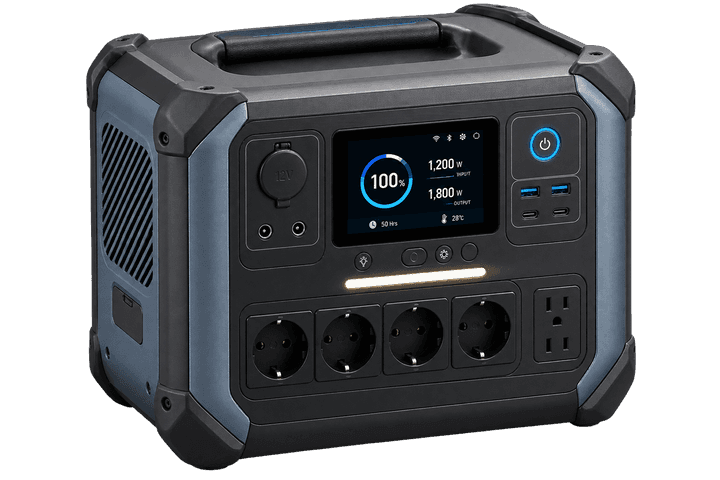
Illustrative image — not an exact product photograph.
- Capacity
- 1,024 Wh
- Output
- 2,000 W
- Weight
- Not verified
Best for: home essentials, camping, RV use, high-power appliances
Price, availability and current rating are shown on Amazon — PowerMatchLab does not display them because we have not independently verified them. As an Amazon Associate we may earn from qualifying purchases.
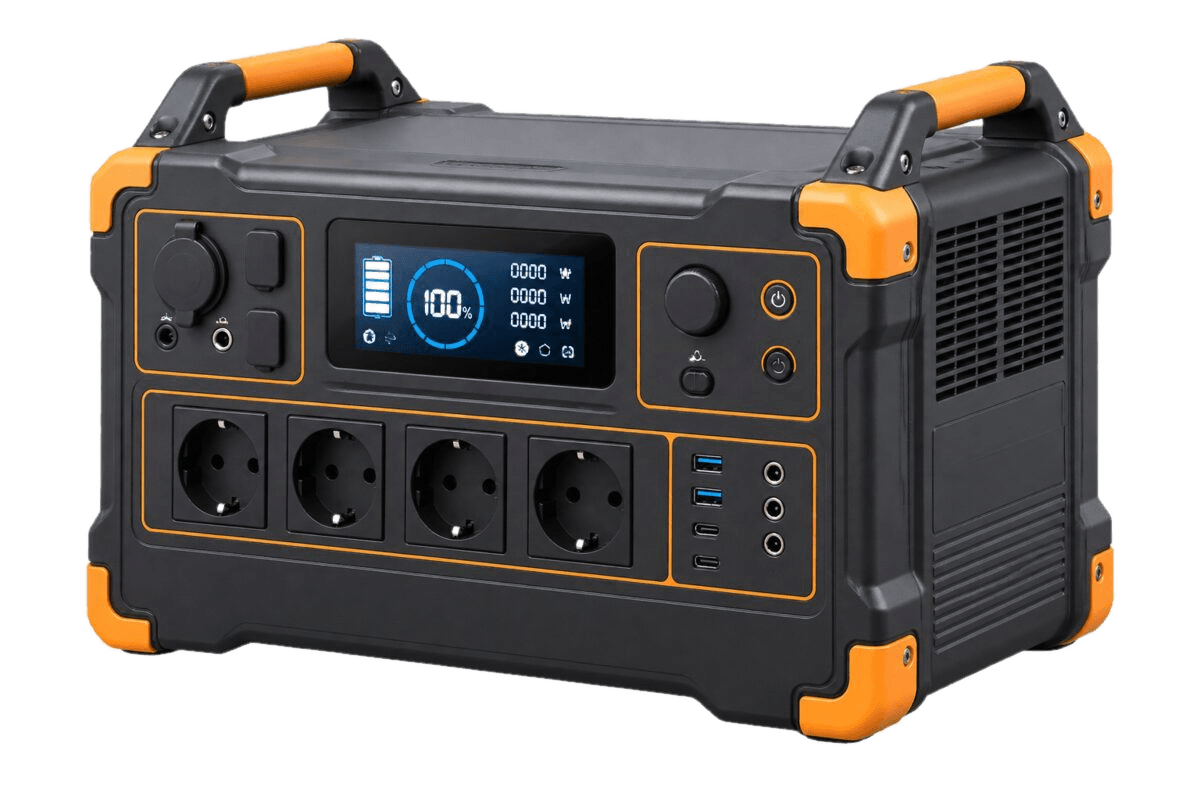
Illustrative image — not an exact product photograph.
- Capacity
- 2,042.8 Wh
- Output
- 3,000 W
- Weight
- 27.9 kg
Best for: home backup, RV use, high-power appliances
Price, availability and current rating are shown on Amazon — PowerMatchLab does not display them because we have not independently verified them. This is a normal Amazon product link; affiliate tracking will be added later.
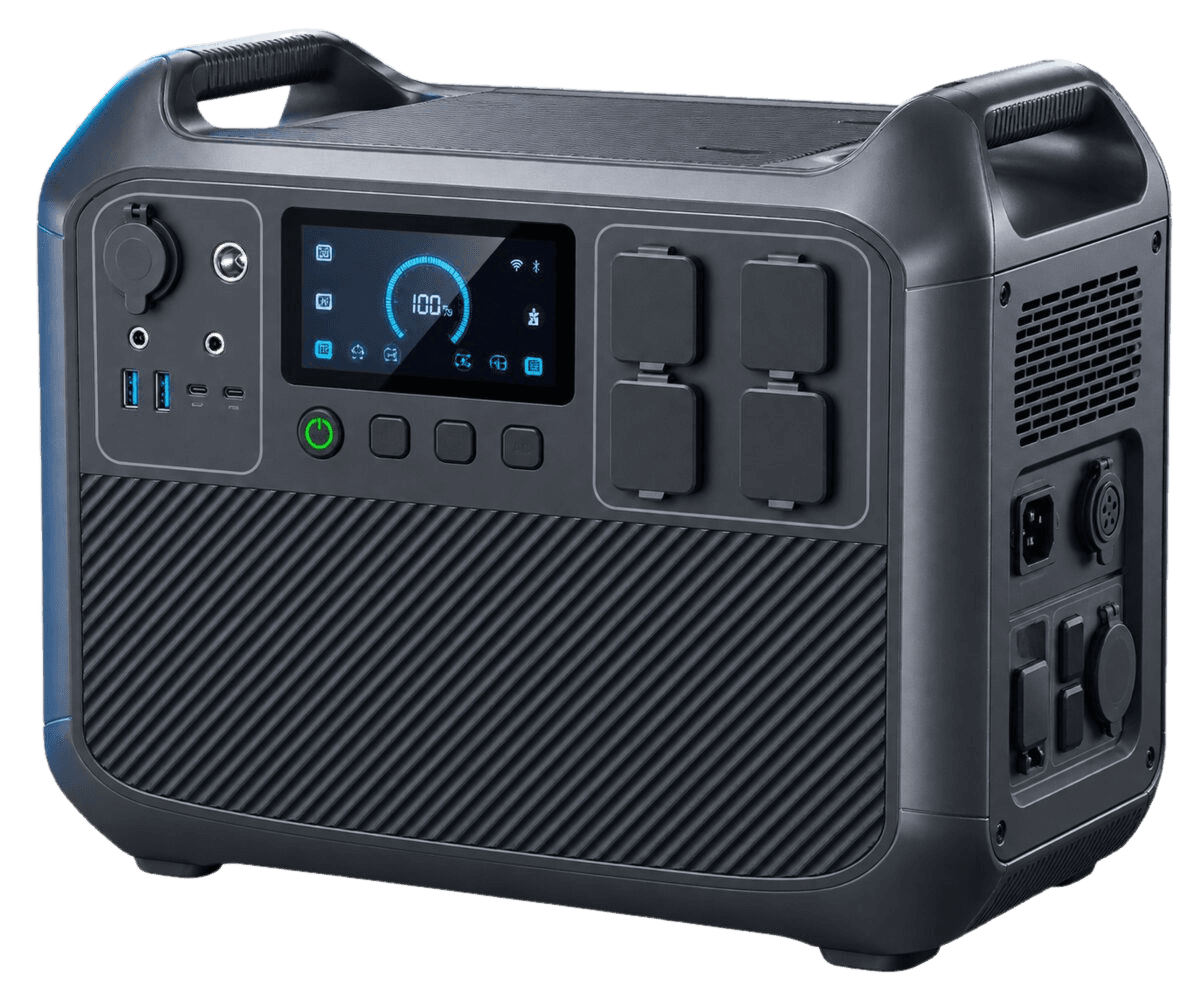
Illustrative image — not an exact product photograph.
- Capacity
- 2,048 Wh
- Output
- 2,400 W
- Weight
- 28.3 kg
Best for: home backup, RV use, off-grid use
Price, availability and current rating are shown on Amazon — PowerMatchLab does not display them because we have not independently verified them. This is a normal Amazon product link; affiliate tracking will be added later.
Related guides
FAQ
How much power does a remote work day really use?
For laptop, monitor, router, and phone charging, commonly a few hundred to around 750 Wh for a full workday — see the worked example above and substitute your own devices' real watts and hours of use.
Do I need solar for van life, or is a big battery enough?
For short trips, a large battery alone can work. For full-time living, a continuous recharge source — solar, driving, or both — is generally more practical than trying to store enough capacity to go indefinitely without recharging.
Can a power station run a van's 12V fridge and my laptop at the same time?
Check the combined continuous watts of both against the station's continuous output rating, and size capacity for their combined daily energy use — the same watts-vs-watt-hours method used throughout PowerMatchLab.
Sources
- U.S. Department of Energy — Estimating Appliance and Home Electronic Energy Use
- Manufacturer specification sheets referenced in products.json
Last updated September 4, 2026. This guide is educational and general; it does not assert product-specific performance beyond what products.json verifies. Some Amazon links on this page are PowerMatchLab Associates links (we may earn from qualifying purchases); others are normal Amazon product links with no affiliate tracking yet — see the disclosure.