RV power needs range from topping off house batteries and running small electronics to starting a rooftop air conditioner. What you actually need depends heavily on which of those you're solving for.
This guide applies PowerMatchLab's standard watts-vs-watt-hours method to RV-specific loads and constraints — shore-cord compatibility, big surge loads, and boondocking days without hookups.
Step 1: Separate small electronics from big appliances
Phones, laptops, lighting, a fan, and a TV are all modest, steady loads — usually single-digit to low double-digit watts for USB devices, tens to low hundreds of watts for AC electronics. A microwave, an electric kettle, or especially a rooftop air conditioner are a different category entirely, often several hundred to well over a thousand watts.
Check each device's rating label or manual for its real running watts rather than guessing; RV appliance labels usually list both amps and watts.
The rooftop air conditioner is the hard case
A typical RV rooftop AC's compressor has a large startup surge, often several times its running watts, for a moment. Many portable power stations cannot start a rooftop AC directly without either a soft-start device on the AC itself or a station with very high surge headroom.
If running the AC from a power station matters to you, check the specific unit's surge/peak output rating against your AC's documented starting characteristics (in its manual or on a soft-start kit's spec sheet) before assuming it will work — this is the single most common RV power-sizing disappointment.
TT-30 shore-power compatibility
A native TT-30 (30A, 120V) outlet lets you plug your RV's standard shore cord straight into the power station, powering the rig's existing distribution panel and everything wired to it. Without a TT-30 outlet, you're limited to whatever household outlets the station provides, and higher-draw circuits inside the RV may not be reachable at all.
Confirm both the outlet type and the amp rating — a household 15/20A outlet is not the same as a 30A shore-power circuit, even if voltage matches.
Step 2: Estimate daily energy for boondocking
List every device you'll run away from hookups, its watts, and hours per day, then add them up the same way as any other PowerMatchLab sizing guide: watts × hours = watt-hours per device, summed for a daily total.
Refrigeration (if it's not propane), lighting, water pump, fans, and device charging are the recurring daily loads for most boondocking setups; occasional loads like a microwave or hair dryer add a smaller amount depending on how often you actually use them.
Step 3: Convert to a recommended capacity
The same adjustments apply as elsewhere on PowerMatchLab: about 85% usable energy after conversion losses, plus roughly 20% reserve headroom. Recommended minimum capacity (Wh) ≈ (daily energy Wh × days without recharge) ÷ 0.85 × 1.2.
Worked example: your boondocking load list adds up to 900 Wh/day, and you're planning for three days without a recharge option. 900 × 3 ÷ 0.85 × 1.2 ≈ 3,812 Wh minimum recommended capacity — well into large-platform territory, which is where an expandable system or a daily recharge plan (driving, solar, or a campground hookup) usually makes more sense than one very large fixed battery.
Recharging on the road
Some power stations accept a 12V/24V DC input that can be fed from the vehicle's alternator with the right cable and current limits, letting you top up while driving between camp spots. Check the unit's documented DC input spec before relying on this.
Solar panels can also recharge a station while parked, but real-world output is usually well below the panel's rated watts — commonly 60-80% on a good day — so size any panel setup so its realistic output, not its rated number, covers your daily need. PowerMatchLab's solar guide covers this in more depth.
Weight, mounting, and expansion
A station that lives in the RV affects payload and needs a secure mounting spot, but portability matters less than for backpack-carried camping gear — check the weight listed on each product's page if payload is tight.
For trips or setups where energy needs might grow, an expandable platform lets you add battery modules later instead of buying a second, separate unit.
Put a number on it
Related products
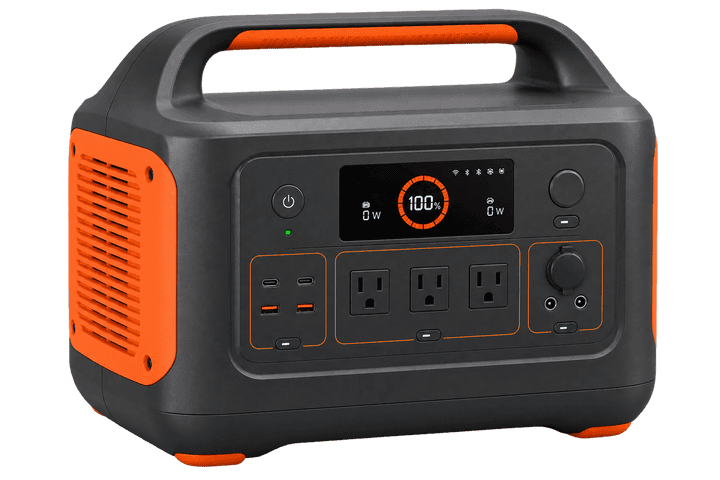
Illustrative image — not an exact product photograph.
- Capacity
- 2,042 Wh
- Output
- 2,200 W
- Weight
- 17.9 kg
Best for: home backup, refrigerator and freezer backup, RV use, camping
Price, availability and current rating are shown on Amazon — PowerMatchLab does not display them because we have not independently verified them. As an Amazon Associate we may earn from qualifying purchases.
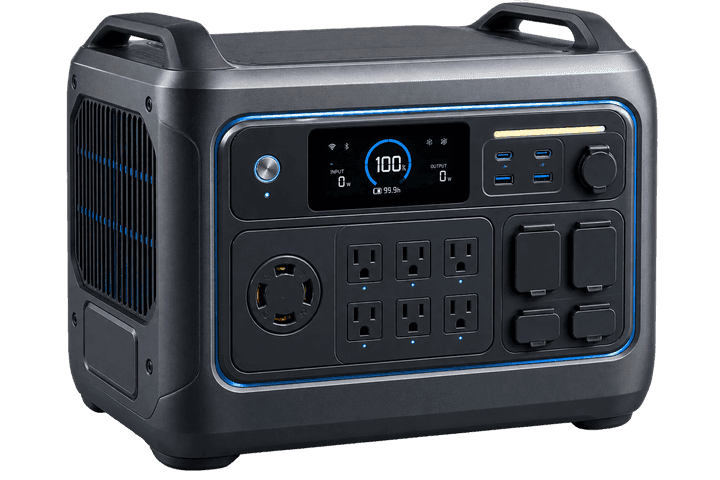
Illustrative image — not an exact product photograph.
- Capacity
- 2,048 Wh
- Output
- 2,400 W
- Weight
- 18.9 kg
Best for: RV, refrigerator backup, home essentials, camping
Price, availability and current rating are shown on Amazon — PowerMatchLab does not display them because we have not independently verified them. As an Amazon Associate we may earn from qualifying purchases.
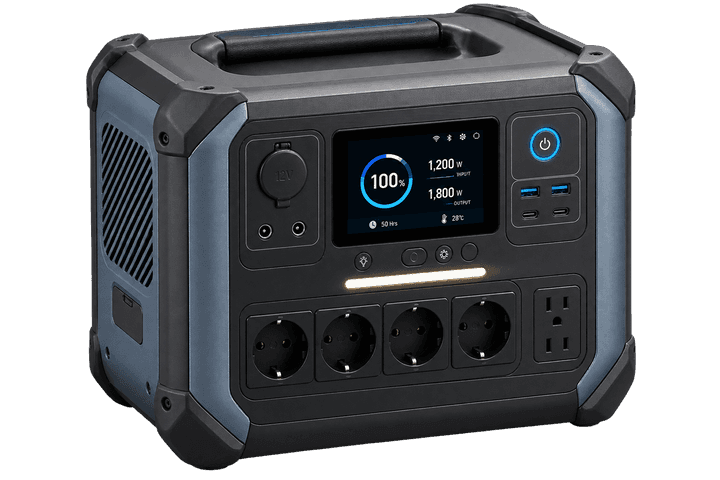
Illustrative image — not an exact product photograph.
- Capacity
- 1,024 Wh
- Output
- 2,000 W
- Weight
- Not verified
Best for: home essentials, camping, RV use, high-power appliances
Price, availability and current rating are shown on Amazon — PowerMatchLab does not display them because we have not independently verified them. As an Amazon Associate we may earn from qualifying purchases.
Related guides
FAQ
- Will a power station run my RV's rooftop air conditioner?
- Only if its surge/peak rating clearly covers the AC's documented startup surge — many cannot without a soft-start device fitted to the AC. Check both the AC's specs and the station's surge rating before assuming it will work; this is the most common RV sizing mismatch.
- Do I need a TT-30 outlet, or will a regular household outlet work?
- If you want to plug your RV's factory shore cord straight in, you need a native TT-30 outlet. A household 120V outlet works for individual devices plugged in directly, but not for powering the rig's built-in distribution panel through its normal shore cord.
- Can a power station replace my RV's house battery and converter?
- Not directly — a power station is a self-contained AC/DC source, not a wired-in replacement for the RV's existing 12V system, converter, and charger. Integrating one with the rig's electrical system generally needs additional wiring.
- How many boondocking days can I plan for?
- Divide the station's usable capacity (roughly 85% of rated Wh) by your daily energy total from Step 2. For longer stretches, either raise capacity, add solar, or plan a recharge drive.
Sources
- U.S. Department of Energy — Estimating Appliance and Home Electronic Energy Use
- U.S. Department of Energy / NREL — Understanding Solar Photovoltaic System Performance
- Manufacturer specification sheets referenced in products.json
Last updated September 3, 2026. This guide is educational and general; it does not assert product-specific performance beyond what products.json verifies. PowerMatchLab may earn a commission from Amazon links once the Associates programme is active — see the disclosure.