Camping loads are usually smaller and more varied than a home-backup setup — phones, lights, a fan, maybe a 12V cooler or a drone battery — but trip length and how (or whether) you can recharge along the way change the sizing math more than the gear list does.
This guide applies the same watts-vs-watt-hours method used across PowerMatchLab to a camping trip, with a worked example you can adapt to your own gear.
Step 1: List your gear and its real watts
Start with every device you actually plan to power: phone and headlamp charging, a camp fan or string lights, a 12V or AC cooler/fridge, camera or drone battery charging, maybe a CPAP machine (see the dedicated CPAP guide) or a laptop for remote work.
Check each device's rating label, charger brick, or manual for its running watts — do not estimate. Small USB devices are usually a few watts each; a 12V compressor cooler or an AC mini-fridge can be tens to over a hundred watts running, with its own startup surge if it's compressor-driven.
Step 2: Estimate daily energy per device
For each device: watts × quantity × hours used per day = watt-hours per day. Add them up for your daily total. A phone charge might be 10-15 Wh total; an evening of string lights at 5 W for four hours is 20 Wh; a 12V cooler cycling like a small fridge can be the largest single line item on the list.
Be honest about hours of use — camping trips often run devices longer than a quick mental estimate suggests, especially lighting after dark and a cooler running continuously.
Step 3: Convert to a recommended capacity
Using the same assumptions as the rest of PowerMatchLab — about 85% usable energy after conversion losses, plus roughly 20% reserve headroom: recommended minimum capacity (Wh) ≈ (daily energy Wh × days without recharge) ÷ 0.85 × 1.2.
Worked example: phone charging (30 Wh), a lantern and string lights (40 Wh), and a 12V cooler (400 Wh) add up to 470 Wh/day. For a two-night trip with no recharge option: 470 × 2 ÷ 0.85 × 1.2 ≈ 1,327 Wh minimum recommended capacity. Adjust the device list and hours to match your own trip.
If you can recharge daily — from a vehicle, a campground hookup, or solar — you generally only need to cover one day's gap at a time rather than the whole trip's total energy.
Step 4: Check continuous and surge output
Add up the running watts of anything that could be on at once — most camping setups have a modest continuous requirement compared to home backup. Then add the largest single startup surge (a compressor-driven cooler is the most likely source) on top of everything else running, and check that figure against the station's surge/peak rating.
All PowerMatchLab-listed stations output pure sine wave AC, which runs sensitive electronics and small compressor motors more predictably than a modified-sine-wave source.
Trip length and how you'll recharge
A weekend car-camping trip with daily vehicle access is a very different sizing problem from a week off-grid with no recharge option — the second scenario needs either much larger capacity or a reliable way to top up, typically solar.
Real-world solar output is usually well below a panel's rated watts because of angle, temperature, haze and time of day — commonly in the 60-80% range on a good day, per general photovoltaic performance guidance. Size any solar input so its realistic output, not its rated number, covers your daily energy need. PowerMatchLab's dedicated solar guide covers this in more depth.
Why campers often choose a battery station over a fuel generator
A battery-based power station has no exhaust and produces no carbon monoxide, unlike a fuel-burning generator. The U.S. Consumer Product Safety Commission has documented deaths from carbon monoxide poisoning tied to fuel-burning camping equipment used in or near enclosed spaces such as tents, and recommends never operating such equipment inside a tent, vehicle, or other enclosed area.
A power station is also silent, which matters at most campgrounds' generator-hour rules and for anyone who would rather not run a small engine next to their tent overnight.
Portability vs. capacity
Bigger capacity generally means more weight — a real trade-off for backpacking versus car camping or overlanding, where the vehicle carries the weight instead of a person. Check the weight listed on each product's page and the Compare tool before deciding how much capacity is actually practical to bring.
Put a number on it
Related products
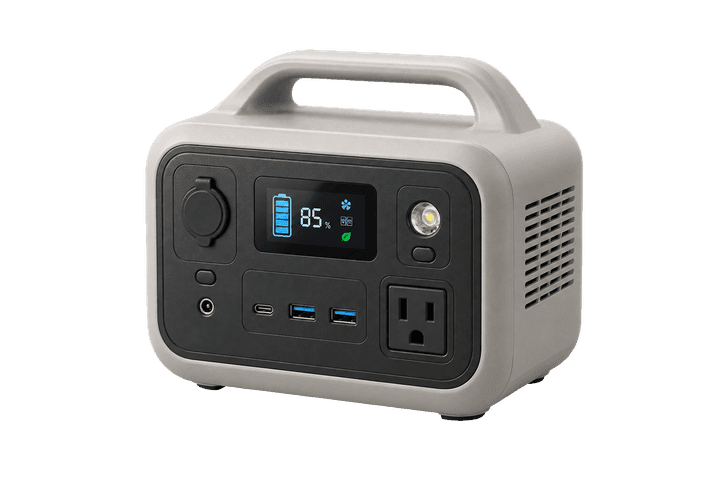
Illustrative image — not an exact product photograph.
- Capacity
- 288 Wh
- Output
- 600 W
- Weight
- 4.3 kg
Best for: camping, day trips, laptops and electronics, light emergency backup
Price, availability and current rating are shown on Amazon — PowerMatchLab does not display them because we have not independently verified them. As an Amazon Associate we may earn from qualifying purchases.
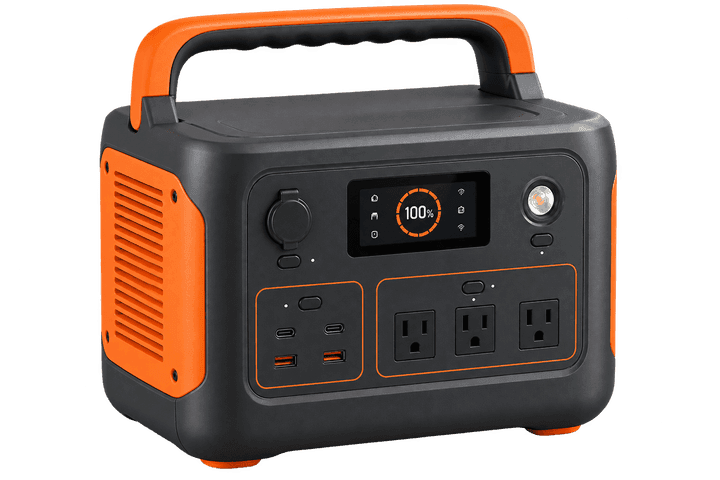
Illustrative image — not an exact product photograph.
- Capacity
- 1,070 Wh
- Output
- 1,500 W
- Weight
- 10.8 kg
Best for: camping, road trips, RV electronics, refrigerator backup
Price, availability and current rating are shown on Amazon — PowerMatchLab does not display them because we have not independently verified them. As an Amazon Associate we may earn from qualifying purchases.
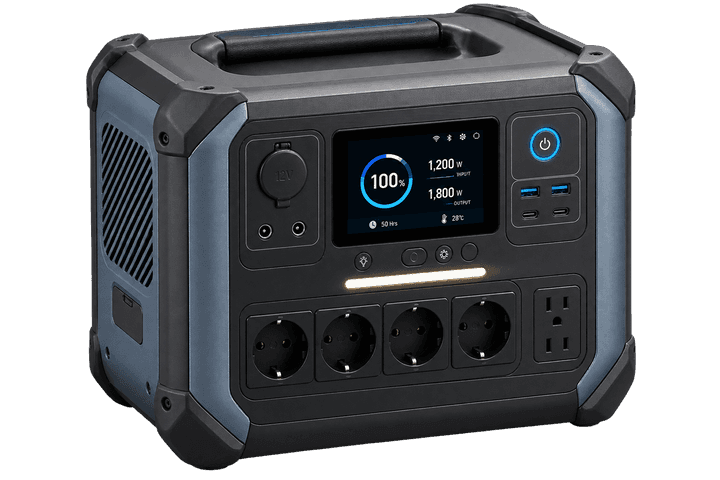
Illustrative image — not an exact product photograph.
- Capacity
- 1,024 Wh
- Output
- 2,000 W
- Weight
- Not verified
Best for: home essentials, camping, RV use, high-power appliances
Price, availability and current rating are shown on Amazon — PowerMatchLab does not display them because we have not independently verified them. As an Amazon Associate we may earn from qualifying purchases.
FAQ
- Do I need solar panels for camping, or is a bigger battery enough?
- Either can work. A larger battery alone is simpler and needs no setup, but adds weight and eventually runs out with no recharge option. Solar adds complexity and depends on weather, but can extend a trip indefinitely in good conditions. Many campers carry a mid-size station and add a panel only for trips longer than a couple of days.
- Can I run a 12V cooler or fridge from a power station while camping?
- Yes, most 12V coolers can run from a power station's DC or AC output — check the cooler's rated watts and, if compressor-driven, its startup surge, then size the station the same way as any other appliance.
- How many days can I go without recharging?
- Divide the station's usable capacity (roughly 85% of rated Wh) by your daily energy total. For longer trips, either raise capacity, add solar, or plan a recharge stop — a vehicle outlet, a campground hookup, or a town run.
- Does cold weather at the campsite affect the battery?
- It can. Battery performance and charging behavior vary by temperature and by chemistry; check your specific model's operating temperature range in its manual before a cold-weather trip, and avoid charging a cold battery below its rated minimum.
Sources
- U.S. Consumer Product Safety Commission — Carbon Monoxide Fact Sheet
- U.S. Department of Energy / NREL — Understanding Solar Photovoltaic System Performance
- Manufacturer specification sheets referenced in products.json
Last updated September 3, 2026. This guide is educational and general; it does not assert product-specific performance beyond what products.json verifies. PowerMatchLab may earn a commission from Amazon links once the Associates programme is active — see the disclosure.