By PowerMatchLab Editorial Team · Last updated September 4, 2026
Short answer: a portable power station is a battery pack, an inverter, and a battery management system built into one portable case — it stores electricity, then converts and delivers it through AC outlets, USB ports, and DC output, without needing fuel or an internet connection.
This guide covers the basic parts, how they work together, and what a power station is not, before pointing you to PowerMatchLab's sizing and buying guides for the next step.
Key takeaways
- A power station is three things in one case: a rechargeable battery, an inverter (DC to AC conversion), and a battery management system (BMS) that protects the cells.
- It stores energy — it does not generate electricity from fuel, so it has no exhaust and needs recharging (AC, solar, or a vehicle) once its capacity is used.
- Two specs define what it can do: watts (continuous/surge output — what it can power) and watt-hours (capacity — how long it can power it).
- Nearly all current models, including every product in the PowerMatchLab catalog, use LiFePO4 batteries for long cycle life and thermal stability.
- Once you understand the parts, the next step is sizing one for your actual devices — see the dedicated sizing guide, linked below.
What a portable power station actually is
At its core, a portable power station is a large rechargeable battery pack built into a case with a built-in inverter and a set of output ports — AC (wall-outlet-style) sockets, USB-A and USB-C ports, and often a 12V DC output. You charge it in advance from a wall outlet, a solar panel, or sometimes a car's outlet, then it powers your devices later, wherever you are.
Unlike a battery bank or power bank, which typically outputs only low-voltage DC through USB, a power station outputs real AC power through standard outlets, which is what lets it run laptops, small appliances, and other mains-powered devices.
The main parts, and what each one does
The battery cells store the actual energy, rated in watt-hours (Wh) — the total amount of energy the unit can hold. Almost every current model, including everything in the PowerMatchLab catalog, uses LiFePO4 (lithium iron phosphate) cells; PowerMatchLab's dedicated chemistry guides cover why.
The inverter converts the battery's stored DC (direct current) power into AC (alternating current) power for the wall-outlet-style sockets, since most household and travel devices expect AC. The inverter's maximum output is the station's continuous watts rating, with a separate, usually higher, surge/peak rating for the brief spike that motor-driven devices draw on startup.
The battery management system (BMS) is a safety and health layer — it monitors cell voltage, temperature, and current, protects against overcharge, over-discharge, and short circuits, and is a major reason modern LiFePO4-based stations have a strong safety record when used as intended.
What a power station is not
A power station is not a fuel generator. It stores electricity rather than generating it from gasoline, propane, or diesel, so it produces no exhaust and can safely sit indoors — but its capacity is finite; once the battery is empty, you must recharge it rather than simply add more fuel.
It is also not the same as a small USB power bank, even though both are portable batteries — a power station's AC output, larger capacity, and higher power ratings put it in a different category, sized for appliances and electronics rather than just phones.
The two specs that define what it can do
Watts (continuous and surge/peak output) determine what the station can power — can it start and run your specific devices at once. Watt-hours (capacity) determine how long it can power them before needing a recharge. PowerMatchLab's watts-vs-watt-hours guide covers this distinction in detail, since confusing the two is the single most common sizing mistake.
Charging specs (AC watts, solar input watts) determine how quickly it refills — covered in PowerMatchLab's dedicated charging guide.
What people typically use one for
Common uses include camping and van life, RV power, remote work away from a fixed outlet, home backup during outages, and running a CPAP machine or a refrigerator during a power cut. PowerMatchLab has a dedicated guide for each of these use cases.
Put a number on it
Related products
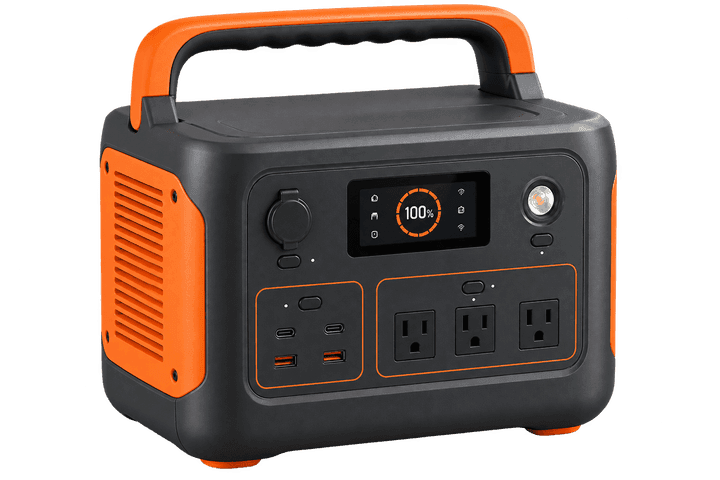
Illustrative image — not an exact product photograph.
- Capacity
- 1,070 Wh
- Output
- 1,500 W
- Weight
- 10.8 kg
Best for: camping, road trips, RV electronics, refrigerator backup
Price, availability and current rating are shown on Amazon — PowerMatchLab does not display them because we have not independently verified them. As an Amazon Associate we may earn from qualifying purchases.
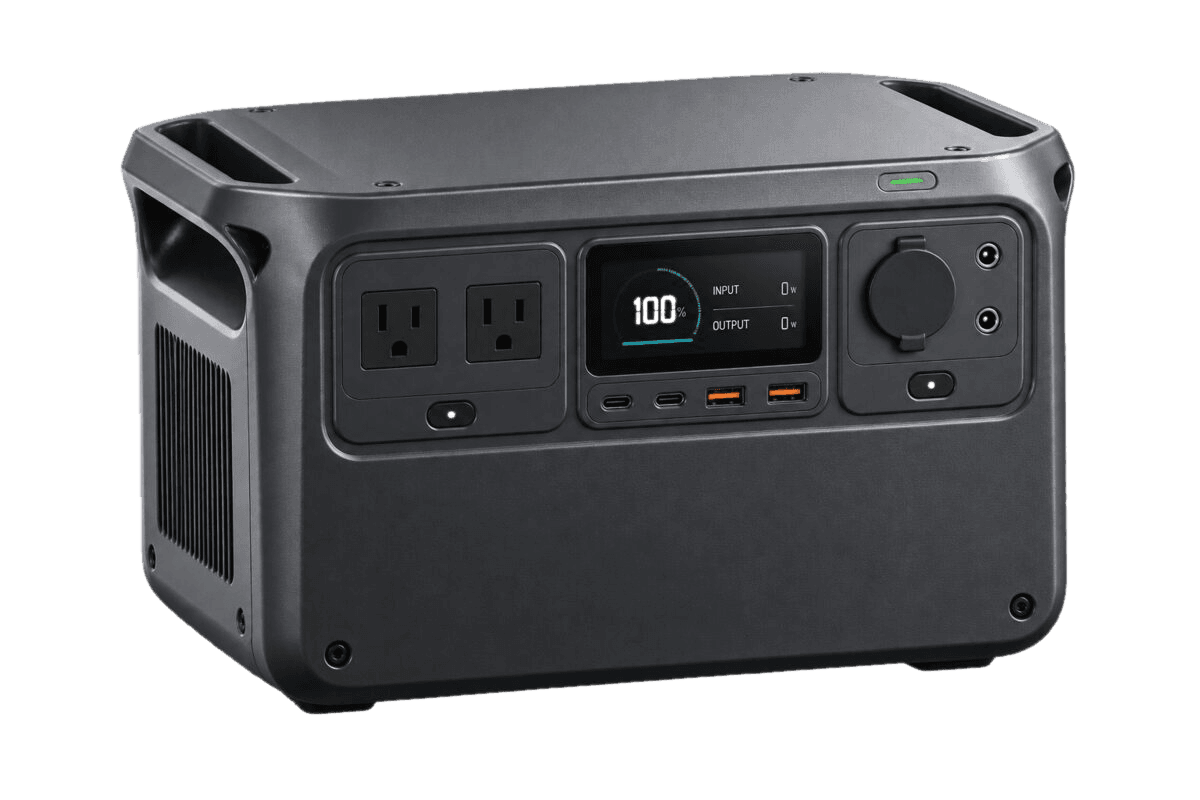
Illustrative image — not an exact product photograph.
- Capacity
- 512 Wh
- Output
- 1,000 W
- Weight
- 7.3 kg
Best for: content creation, drone and camera gear charging, camping, light home backup
Price, availability and current rating are shown on Amazon — PowerMatchLab does not display them because we have not independently verified them. This is a normal Amazon product link; affiliate tracking will be added later.
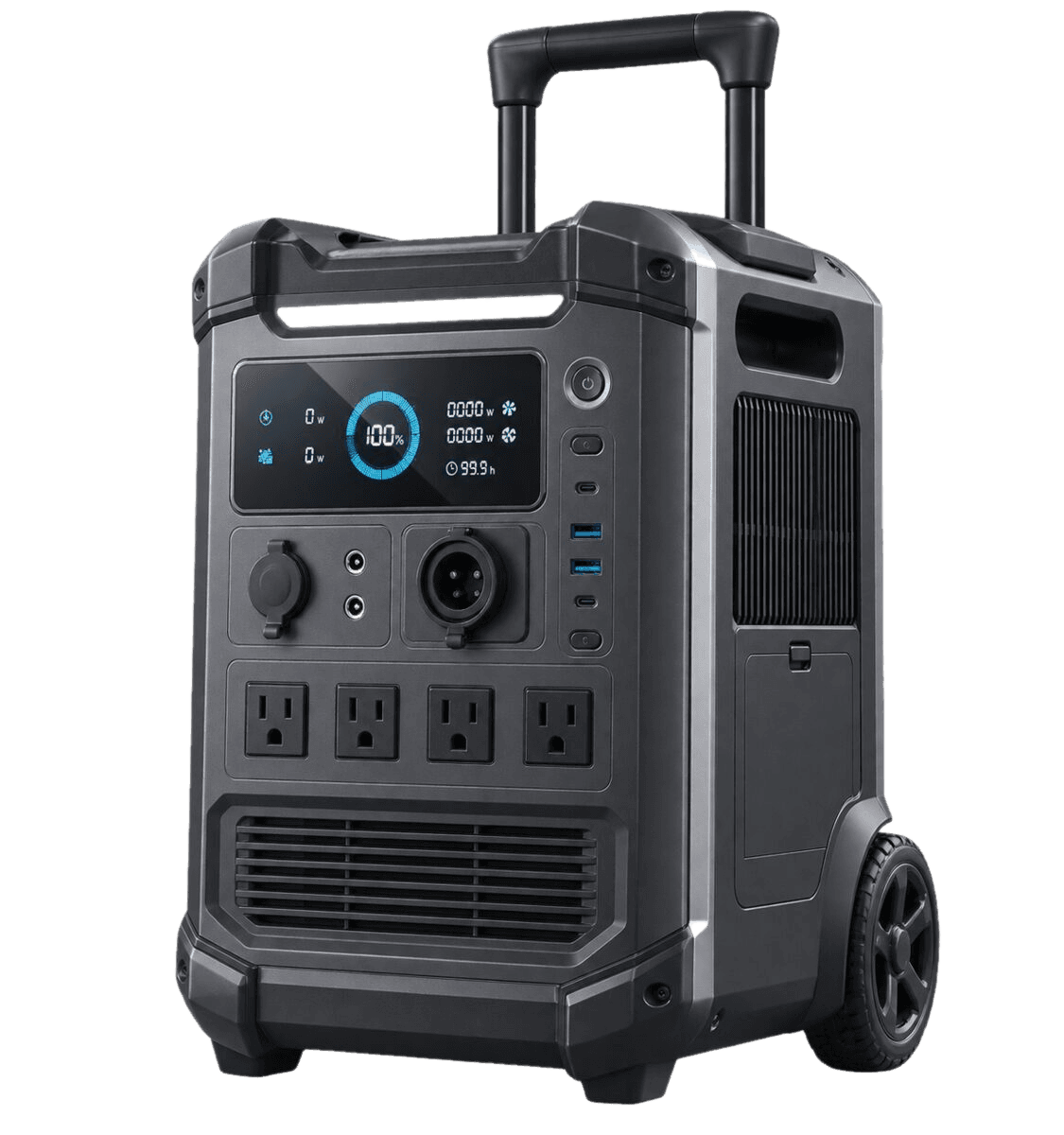
Illustrative image — not an exact product photograph.
- Capacity
- 5,120 Wh
- Output
- 2,200 W
- Weight
- 51 kg
Best for: whole-home backup, emergency backup, off-grid use
Price, availability and current rating are shown on Amazon — PowerMatchLab does not display them because we have not independently verified them. This is a normal Amazon product link; affiliate tracking will be added later.
Related guides
FAQ
Is a portable power station the same as a generator?
No. A generator burns fuel to produce electricity on demand and can run as long as fuel lasts, but produces exhaust and must never run indoors. A power station stores pre-charged electricity, has no exhaust, and can sit indoors, but has a finite capacity that requires recharging once used.
How long does a power station keep its charge when not in use?
This varies by model and is a manufacturer-published spec (often described as self-discharge rate or standby time) — check the specific product's documentation rather than assuming a figure, since PowerMatchLab does not publish an unverified estimate.
Can I use a power station indoors?
Yes — unlike a fuel generator, a battery-based power station produces no exhaust, which is a large part of why many people choose one specifically for indoor-adjacent use during an outage.
Sources
- U.S. Department of Energy — DOE Explains...Batteries
- Manufacturer specification sheets referenced in products.json
Last updated September 4, 2026. This guide is educational and general; it does not assert product-specific performance beyond what products.json verifies. Some Amazon links on this page are PowerMatchLab Associates links (we may earn from qualifying purchases); others are normal Amazon product links with no affiliate tracking yet — see the disclosure.