By PowerMatchLab Editorial Team · Last updated September 4, 2026
Short answer: a 1,000 W continuous-output power station comfortably runs most small electronics and light appliances — laptops, TVs, routers, lighting, phone charging, a CPAP machine, a coffee maker, or a small refrigerator — either one at a time or several combined, as long as their total running watts stays at or below 1,000 W. Higher-draw appliances like a full-power microwave or a space heater typically exceed it.
This guide lists common devices against their typical running watts so you can check your own combination, using the same watts-vs-watt-hours method as the rest of PowerMatchLab.
Key takeaways
- 1,000 W is a continuous output ceiling — add up the running watts of everything you'd use at once and keep the total at or below it.
- Startup surge is a separate check: a compressor-driven device (fridge, some coolers) briefly draws more than its running watts, and needs the station's surge rating, not its continuous rating, to clear it.
- Common devices that individually fit comfortably under 1,000 W: laptop (~60 W), TV (~100 W), Wi-Fi router (~18 W), LED lighting (~40 W), phone charging (~12 W), CPAP (~40 W), a coffee maker (~900 W alone).
- Common devices that typically exceed a 1,000 W continuous rating alone: a full-power microwave (~1,200 W) and most space heaters (~1,500 W).
- Watts (can it run at all) and watt-hours (how long it runs) are separate questions — see PowerMatchLab's watts-vs-watt-hours guide for the full distinction.
What "1,000 W continuous" actually limits
A station's continuous output rating is the maximum it can sustain steadily. Everything running at the same time needs to add up to at or below that number — it is not a per-device limit, it's a combined-load limit.
A separate surge (or peak) rating governs the brief spike that motor-driven appliances draw on startup, commonly two to three times their running watts. Check both specs, not just the continuous number, before assuming a device will start.
Devices that typically fit comfortably, alone or combined
Using commonly cited category wattages (check your own device's rating label for its real figure):
- Laptop: ~60 W
- LED TV: ~100 W
- Wi-Fi router: ~18 W
- LED lighting: ~40 W
- Phone charging: ~12 W
- CPAP machine (blower, modest humidifier setting): ~40 W
- Coffee maker: ~900 W (alone — leaves little headroom for anything else)
- Combined example: laptop + TV + router + LED lighting + phone charging ≈ 60 + 100 + 18 + 40 + 12 = 230 W total, well under 1,000 W with headroom to spare
Devices that typically exceed 1,000 W alone
A full-power microwave commonly draws around 1,200 W running — above a 1,000 W continuous rating on its own, regardless of what else is or isn't also running. Most space heaters run around 1,500 W on their higher setting, also above the ceiling.
These aren't necessarily off-limits with a larger-output station — PowerMatchLab's dedicated microwave guide covers the specific check in more depth — but a 1,000 W-class unit is generally not the right fit for either.
The refrigerator case: a good fit on paper, but check the surge
A household refrigerator's running watts (commonly around 150 W average) fits easily within a 1,000 W continuous budget. The catch is the compressor's startup surge, often 2-3× running watts — check the station's surge/peak rating specifically, since a 1,000 W continuous rating says nothing about surge headroom on its own. PowerMatchLab's dedicated refrigerator guide covers this calculation in full.
Put a number on it
Related products
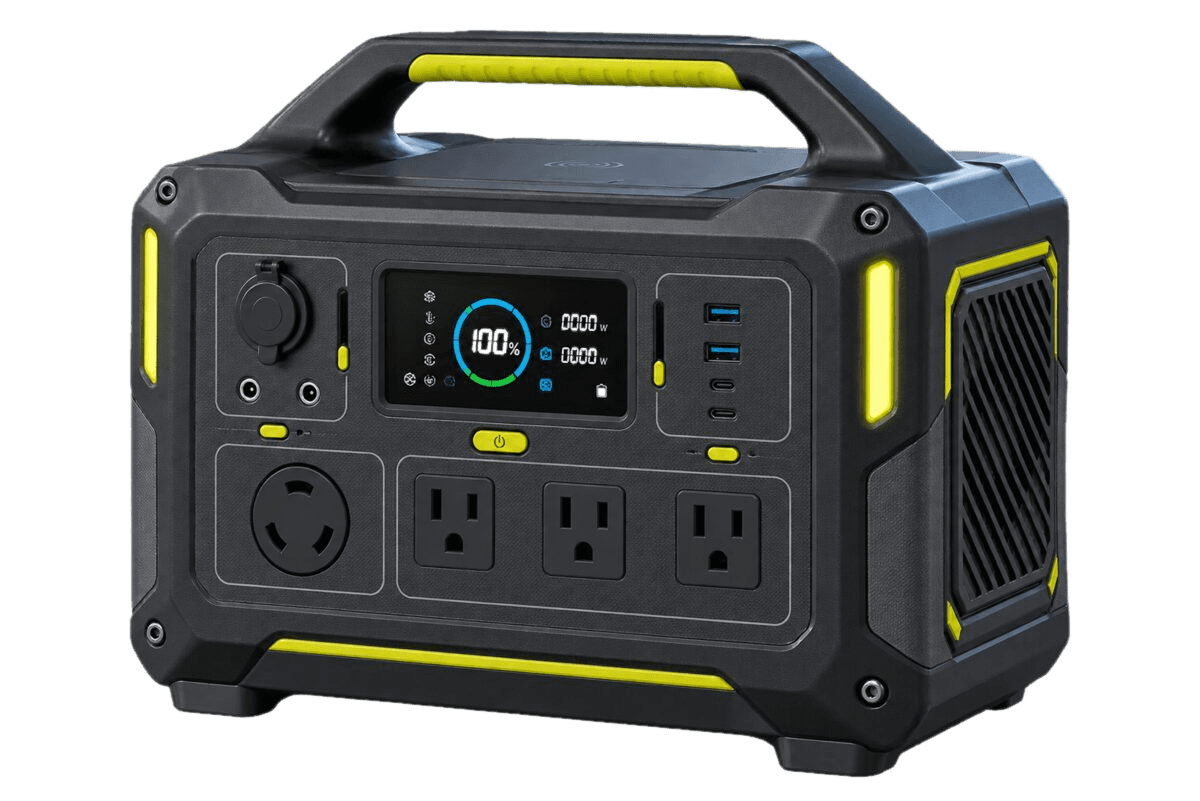
Illustrative image — not an exact product photograph.
- Capacity
- 828 Wh
- Output
- 1,000 W
- Weight
- 16.96 kg
Best for: camping, travel, home backup
Price, availability and current rating are shown on Amazon — PowerMatchLab does not display them because we have not independently verified them. This is a normal Amazon product link; affiliate tracking will be added later.
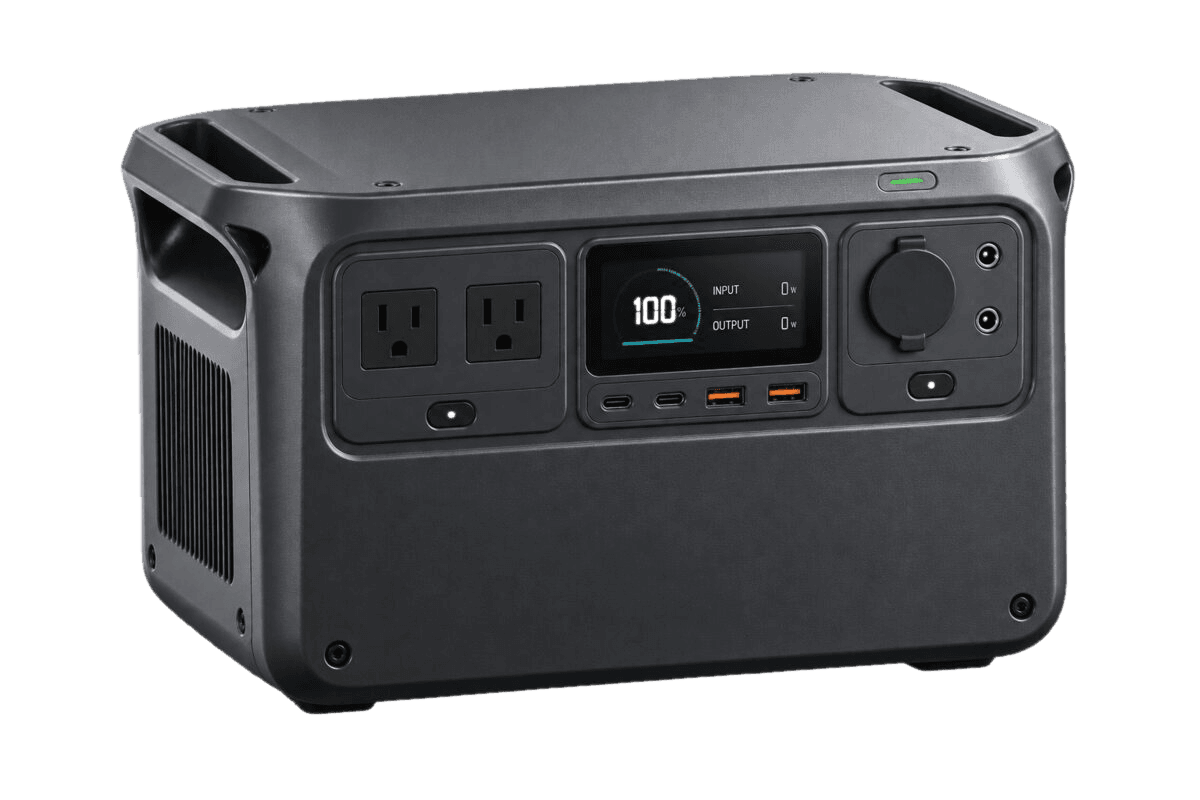
Illustrative image — not an exact product photograph.
- Capacity
- 512 Wh
- Output
- 1,000 W
- Weight
- 7.3 kg
Best for: content creation, drone and camera gear charging, camping, light home backup
Price, availability and current rating are shown on Amazon — PowerMatchLab does not display them because we have not independently verified them. This is a normal Amazon product link; affiliate tracking will be added later.
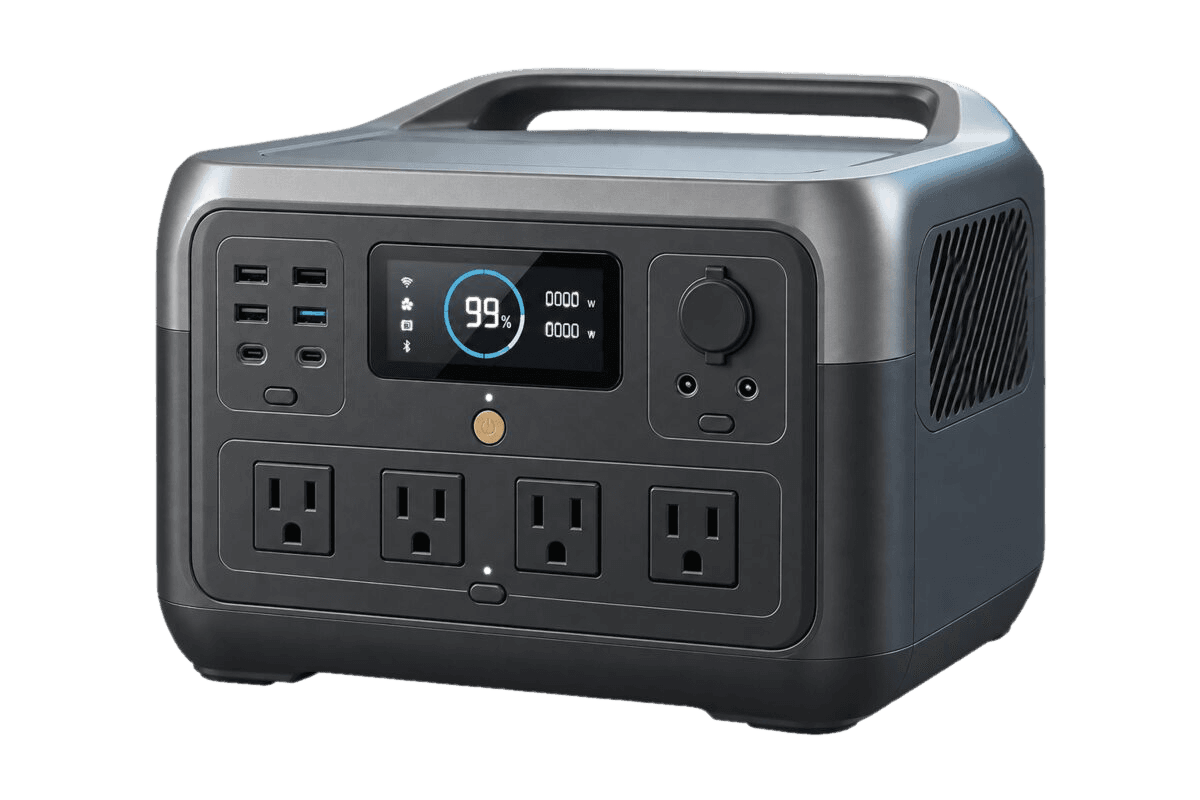
Illustrative image — not an exact product photograph.
- Capacity
- 768 Wh
- Output
- 800 W
- Weight
- 8.26 kg
Best for: camping, road trips, refrigerator backup, light home backup
Price, availability and current rating are shown on Amazon — PowerMatchLab does not display them because we have not independently verified them. This is a normal Amazon product link; affiliate tracking will be added later.
Related guides
FAQ
Can a 1,000W power station run a refrigerator?
Its running watts (commonly ~150 W) fit easily, but check the station's surge/peak rating against the fridge's startup spike separately — that is usually the limiting factor, not the continuous rating. See PowerMatchLab's refrigerator guide for the full method.
Can I run a microwave on a 1,000W power station?
Often not alone — a full-power microwave commonly draws around 1,200 W running, above a 1,000 W continuous ceiling. Check your specific microwave's rating label; some smaller or lower-power models may fit.
Does 1,000W mean I can run any single device rated under 1,000W?
Generally yes for running watts, but also check the device's startup surge if it has a motor or compressor — a device with modest running watts can still have a surge that exceeds the station's separate surge rating.
Sources
- U.S. Department of Energy — Estimating Appliance and Home Electronic Energy Use
- Manufacturer specification sheets referenced in products.json
Last updated September 4, 2026. This guide is educational and general; it does not assert product-specific performance beyond what products.json verifies. The Amazon links on this page are normal product links; affiliate tracking has not been added for these products yet — see the disclosure.