By PowerMatchLab Editorial Team · Last updated September 4, 2026
Short answer: yes, if the station's continuous output rating clears the microwave's running watts (commonly around 1,200 W for a typical countertop model) with its surge rating covering the brief startup spike — capacity then determines how many uses you get per charge, not whether it works at all.
This guide covers the output check first, since it's the more common blocker, then the energy math for how many microwave uses a given capacity supports.
Key takeaways
- Check output first: the microwave's running watts (commonly ~1,200 W) must be at or below the station's continuous output rating, or it won't start regardless of capacity.
- A microwave's own rating label lists running/input watts, not its "cooking power" (e.g. "1000W" microwaves often draw more like 1,200-1,700 W running) — check the label, not the marketing number.
- Energy per use ≈ running watts × minutes used ÷ 60. A 1,200 W microwave run for 5 minutes uses about 100 Wh.
- Estimated uses per charge ≈ usable capacity (≈85% of rated Wh) ÷ energy per use — see the worked table below.
- This is a calculation, not a guaranteed test result — your microwave's real wattage and typical run time will differ from the example figures.
Step 1: Check the station's output against the microwave's running watts
A microwave's rating label (usually inside the door frame or on the back) lists its running or input watts — this is typically higher than its advertised "cooking power," since the magnetron isn't 100% efficient. A microwave marketed as "1000W cooking power" commonly draws somewhere around 1,200-1,700 W running, depending on the model.
The station's continuous output rating needs to clear that running-watts figure, and its surge/peak rating needs to clear the brief startup spike, before capacity is even a relevant question. If the continuous output is too low, the microwave simply won't start, no matter how much energy is stored.
Step 2: Energy per use, and how many uses per charge
Once output is confirmed to be sufficient, the relevant capacity question is how many uses you get per charge, not a continuous-runtime figure — nobody runs a microwave for hours at a stretch.
Energy per use (Wh) ≈ running watts × minutes used ÷ 60. Worked example: a 1,200 W microwave run for 5 minutes uses 1,200 × 5 ÷ 60 = 100 Wh for that one use.
Estimated uses per charge ≈ usable capacity (≈85% of rated Wh) ÷ energy per use. Applied across a few capacity classes now in the PowerMatchLab catalog, at the same 1,200 W / 5-minute assumption:
- ~1,000Wh-class: 1,000 × 0.85 ÷ 100 ≈ 8.5 uses per charge
- ~2,000Wh-class: 2,000 × 0.85 ÷ 100 ≈ 17 uses per charge
- ~3,000Wh-class: 3,000 × 0.85 ÷ 100 ≈ 25.5 uses per charge
Which stations can even start a microwave
Many compact and some mid-size stations have a continuous output rating below common microwave running watts, which rules them out regardless of capacity. Check the specific product's continuous output rating on its PowerMatchLab product page or in the Compare tool against your microwave's own label before assuming it will work.
Put a number on it
Related products
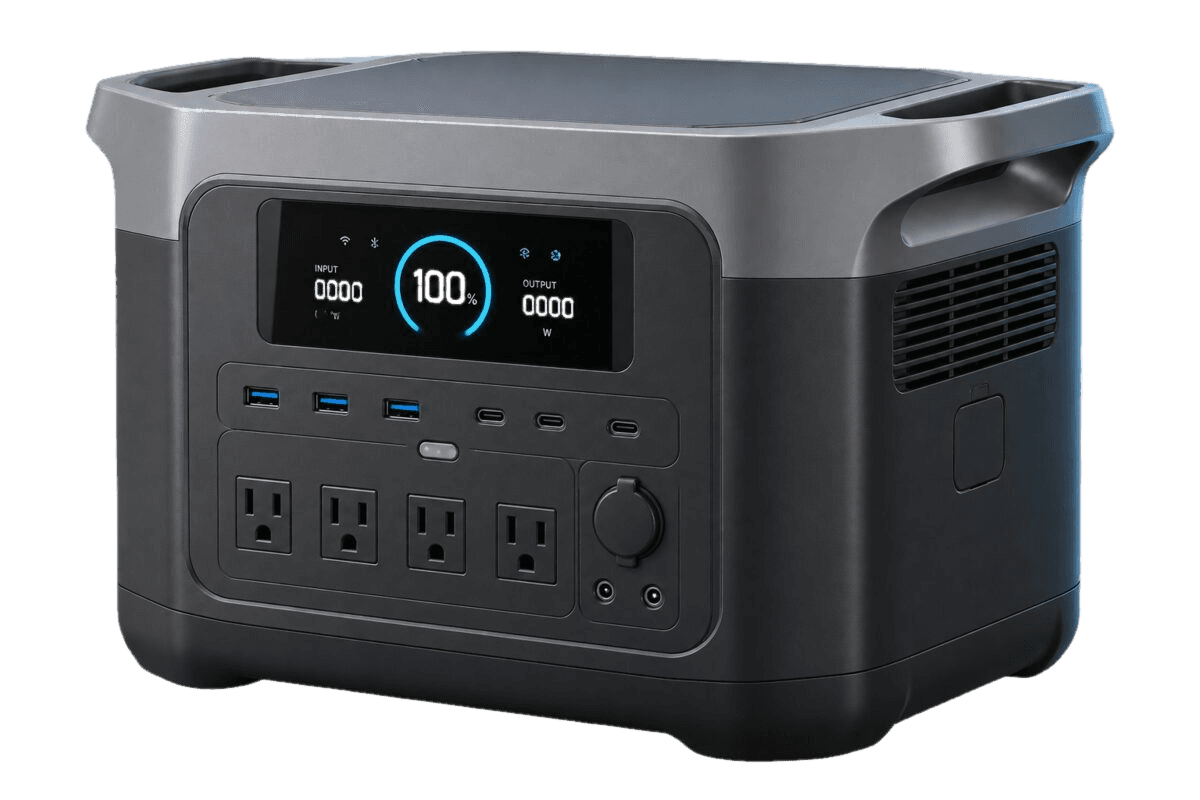
Illustrative image — not an exact product photograph.
- Capacity
- 2,048 Wh
- Output
- 2,400 W
- Weight
- 23 kg
Best for: home backup, camping, refrigerator backup
Price, availability and current rating are shown on Amazon — PowerMatchLab does not display them because we have not independently verified them. This is a normal Amazon product link; affiliate tracking will be added later.
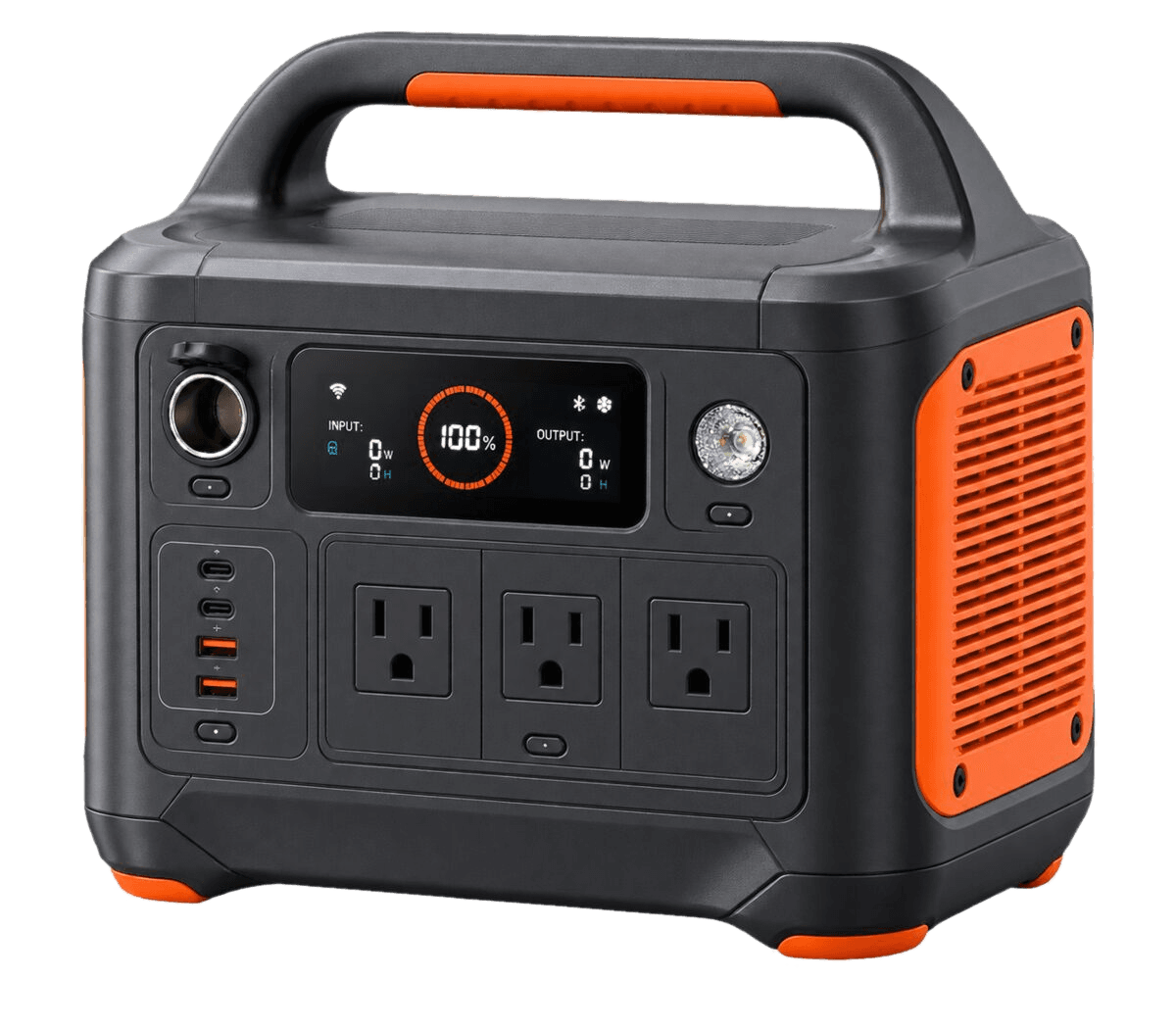
Illustrative image — not an exact product photograph.
- Capacity
- 1,024 Wh
- Output
- 2,200 W
- Weight
- 16.2 kg
Best for: home backup, high-draw appliances, emergency backup
Price, availability and current rating are shown on Amazon — PowerMatchLab does not display them because we have not independently verified them. This is a normal Amazon product link; affiliate tracking will be added later.
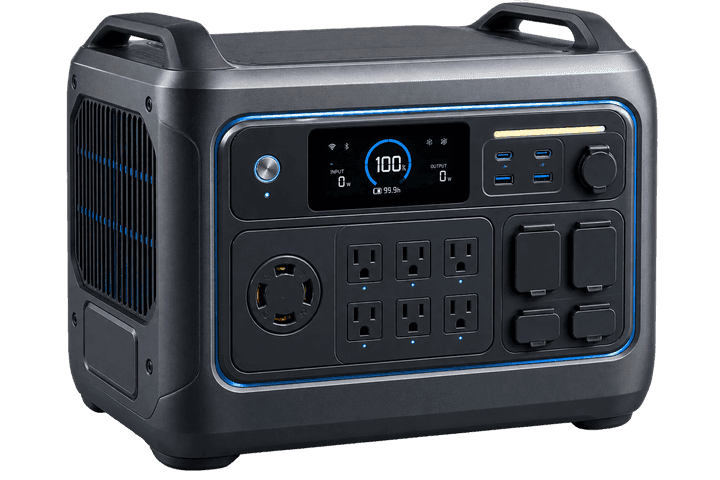
Illustrative image — not an exact product photograph.
- Capacity
- 2,048 Wh
- Output
- 2,400 W
- Weight
- 18.9 kg
Best for: RV, refrigerator backup, home essentials, camping
Price, availability and current rating are shown on Amazon — PowerMatchLab does not display them because we have not independently verified them. As an Amazon Associate we may earn from qualifying purchases.
Related guides
FAQ
Why does my microwave draw more watts than its "cooking power" label?
The wattage marketed on a microwave (e.g. "1000W") describes its cooking output, not its electrical draw. The magnetron isn't perfectly efficient, so actual running watts pulled from the outlet are typically higher — check the rating label (usually inside the door frame or on the back) for the real input watts.
Will a microwave's startup surge trip a power station?
Microwaves have a modest surge compared to compressor-driven appliances, but every model differs — check the station's surge/peak rating against the microwave's documented startup characteristics if the manufacturer publishes one, rather than assuming it's a non-issue.
How many times can I microwave something on one charge?
Divide usable capacity (roughly 85% of rated Wh) by the energy used per session (running watts × minutes ÷ 60). See the worked table above for a few capacity classes at a common 1,200 W / 5-minute assumption, then substitute your own microwave's real numbers.
Sources
- U.S. Department of Energy — Estimating Appliance and Home Electronic Energy Use
- Manufacturer specification sheets referenced in products.json
Last updated September 4, 2026. This guide is educational and general; it does not assert product-specific performance beyond what products.json verifies. Some Amazon links on this page are PowerMatchLab Associates links (we may earn from qualifying purchases); others are normal Amazon product links with no affiliate tracking yet — see the disclosure.