By PowerMatchLab Editorial Team · Last updated September 4, 2026
Short answer: required panel rated watts ≈ your daily energy need (Wh) ÷ (realistic derate × realistic full-sun hours for your location) — and the result must not exceed the station's own maximum solar input watts, which is a hard ceiling regardless of how much panel you connect.
This guide walks through that formula with a worked example, using the same realistic-solar-output approach as PowerMatchLab's other charging guides.
Key takeaways
- Required panel watts ≈ daily energy need (Wh) ÷ (realistic derate × full-sun hours) — solve for panel size, not just charging time.
- Real-world solar delivers roughly 60-80% of a panel's rated watts because of angle, temperature, haze, and wiring losses — use that range, not the rated number, in your math.
- "Full-sun hours" (a location's peak-equivalent sun) is usually meaningfully less than total daylight hours — check a solar-resource estimate for your area rather than assuming a full day counts.
- The station's own maximum solar input watts is a hard ceiling — a larger panel array than that spec doesn't help, since the station simply won't accept more.
- Only the original 10 PowerMatchLab catalog products currently have a verified solar input spec; for the rest it is shown as "Not verified" rather than assumed.
The formula
Required panel rated watts ≈ daily energy need (Wh) ÷ (realistic derate × full-sun hours). Rearranged from the same charging-time formula used in PowerMatchLab's solar charging-time guide, solving for panel size instead of time.
"Realistic derate" accounts for the gap between a panel's lab-rated watts and what it delivers outdoors — commonly 60-80% on a good day, per general photovoltaic performance guidance. "Full-sun hours" is your location's estimated hours of peak-equivalent sun per day, which is less than total daylight hours.
Worked example
Say your daily energy need is 1,200 Wh, your location gets roughly 5 full-sun hours on an average day, and you plan for a 70% realistic derate. Required panel watts ≈ 1,200 ÷ (0.70 × 5) = 1,200 ÷ 3.5 ≈ 343 W of rated panel capacity to realistically cover that daily need.
If your location gets fewer full-sun hours (winter, higher latitude, frequent haze), you need proportionally more rated panel watts for the same daily energy target — a local solar-resource estimate is more accurate than a rough national average.
Check the station's own solar input ceiling
Every station has a maximum solar input watts spec — pairing it with a panel array rated well above that ceiling doesn't help, since the charge controller simply won't accept more than its rated input regardless of what the panels could theoretically produce in perfect sun.
Among the current PowerMatchLab catalog, only the original 10 V1 products have a manufacturer-verified solar input spec on file; for the 25 products added since, this field is shown as "Not verified" until confirmed, rather than assumed from a similar model.
A few practical configuration notes
Multiple smaller panels wired together can reach the same total watts as one large panel, and are often easier to angle toward the sun individually or fold for transport — check the station's supported input voltage/current window before combining panels, since exceeding it can prevent charging or trigger a safety cutoff.
Panel angle and orientation toward the sun meaningfully affect real output — a flat or poorly-angled panel underperforms even a smaller, well-angled one.
Put a number on it
Related products
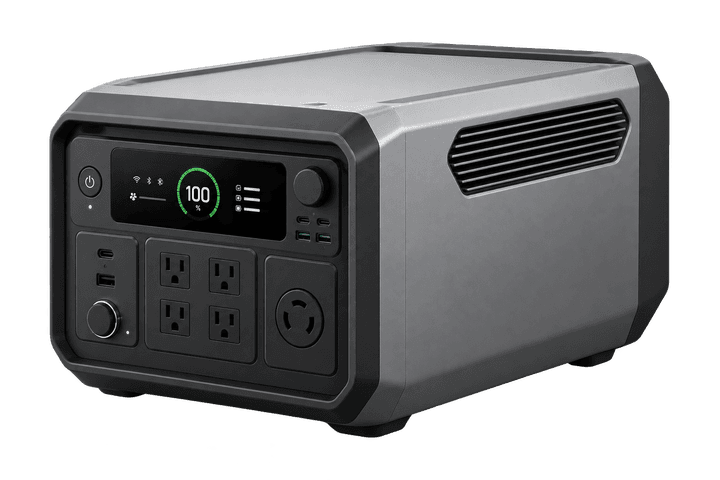
Illustrative image — not an exact product photograph.
- Capacity
- 1,024 Wh
- Output
- 1,800 W
- Weight
- 12.1 kg
Best for: home essentials, refrigerator backup, camping, electronics
Price, availability and current rating are shown on Amazon — PowerMatchLab does not display them because we have not independently verified them. As an Amazon Associate we may earn from qualifying purchases.
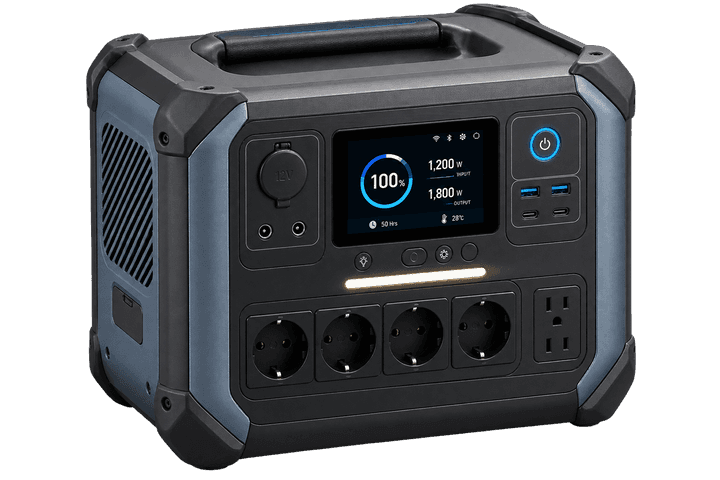
Illustrative image — not an exact product photograph.
- Capacity
- 1,024 Wh
- Output
- 2,000 W
- Weight
- Not verified
Best for: home essentials, camping, RV use, high-power appliances
Price, availability and current rating are shown on Amazon — PowerMatchLab does not display them because we have not independently verified them. As an Amazon Associate we may earn from qualifying purchases.
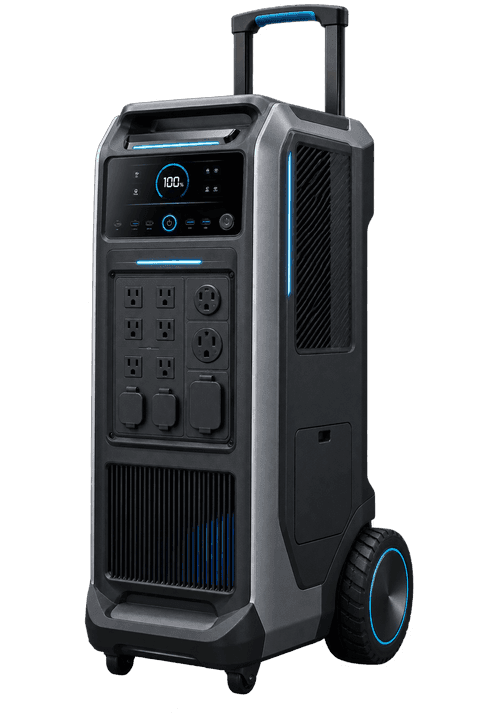
Illustrative image — not an exact product photograph.
- Capacity
- 3,840 Wh
- Output
- 6,000 W
- Weight
- 60 kg
Best for: whole-home backup, RV, 240V appliances, EV emergency charging
Price, availability and current rating are shown on Amazon — PowerMatchLab does not display them because we have not independently verified them. As an Amazon Associate we may earn from qualifying purchases.
Related guides
FAQ
Can I just buy the biggest solar panel I can find?
Not usefully beyond the station's maximum solar input watts spec — that's a hard ceiling on how much the unit will actually accept, regardless of panel size. Size the panel to your daily energy need and the station's input ceiling, not to the largest available panel.
How do I find my location's full-sun hours?
Search for a solar-resource or "peak sun hours" estimate for your specific area — these vary by latitude, season, and typical local weather, and are more accurate than a rough national average.
Is the 60-80% derate always accurate?
It's a commonly cited real-world range for good conditions, not a guarantee — overcast weather, poor panel angle, heat, or partial shading can push real output lower. Treat it as a planning range, not an exact figure.
Sources
- U.S. Department of Energy / NREL — Understanding Solar Photovoltaic System Performance
- Manufacturer charging specifications referenced in products.json
Last updated September 4, 2026. This guide is educational and general; it does not assert product-specific performance beyond what products.json verifies. As an Amazon Associate, PowerMatchLab earns from qualifying purchases made through the Amazon links on this page — see the disclosure.