By PowerMatchLab Editorial Team · Last updated September 4, 2026
Short answer: "how long does it last" has two different meanings — runtime per charge (covered in PowerMatchLab's other runtime guides) and overall lifespan, meaning how many charge cycles or years before the battery meaningfully degrades. This guide covers the second meaning: current LiFePO4-based stations are commonly rated for several thousand charge cycles, which can translate to well over a decade for typical home use.
The real-world number depends on the specific cell, how the manufacturer manages it, and how the owner uses and stores it — this guide covers the published figures and the factors that move the number in either direction.
Key takeaways
- "Cycle life" means how many full charge/discharge cycles a battery survives before dropping to a stated capacity threshold (commonly 80%), not a hard failure point — capacity degrades gradually, it doesn't stop working at that threshold.
- Published LiFePO4 cycle-life figures in the PowerMatchLab catalog range from roughly 3,000 to 10,000+ cycles depending on the model and the capacity threshold cited — always check the specific product's own figure rather than assuming one number for all LiFePO4 units.
- Charging a few times a week, a several-thousand-cycle rating can realistically translate to well over a decade of useful life.
- Heat, deep discharges, and charging in freezing temperatures are the main factors that shorten real-world lifespan versus the rated figure.
- Warranty length is a useful secondary signal of how long a manufacturer expects the unit to perform, though it is a business commitment, not a technical measurement.
What "cycle life" actually measures
A charge cycle is generally one full discharge-and-recharge cycle (though partial cycles are typically counted proportionally by manufacturers). Cycle life is the number of such cycles a battery survives before its capacity drops to a stated threshold, commonly 80% of its original rated capacity.
Reaching that threshold does not mean the battery stops working — it means it holds somewhat less energy than when new, and capacity continues to decline gradually afterward. A station rated for "4,000 cycles to 80%" is still usable well beyond that point, just at reduced capacity.
Real published figures from the current catalog
Cycle-life figures are exactly as published by each manufacturer, and only listed when a product's specification includes one — PowerMatchLab never estimates or infers a figure. A few examples currently on file:
- BLUETTI Elite 30 V2: 3,000+ cycles (manufacturer-stated)
- Jackery Explorer 1000 V2: 4,000 cycles to 70%+ capacity (manufacturer-stated)
- Anker SOLIX S2000: 6,000 cycles to 80%; 10,000 cycles to 60% (manufacturer-stated)
Converting cycles into a realistic number of years
Roughly: years of useful life ≈ cycle-life rating ÷ cycles per year. Charging fully once a week is about 52 cycles a year; a 4,000-cycle rating at that pace suggests roughly 77 years of cycles — in practice, calendar aging (chemical aging that happens regardless of use) and real-world factors mean actual lifespan is shorter than that raw division, but it illustrates why light, infrequent use rarely wears out a modern LFP battery on cycle count alone.
Someone charging daily uses cycles roughly 7× faster than someone charging weekly — frequency of use matters more to lifespan than most other single factor.
What shortens real-world lifespan
Heat is the most consistently cited factor — storing or regularly charging a battery in a hot environment accelerates chemical aging beyond the cycle-count rating alone.
Frequent full discharges to 0% stress cells more than partial cycles; many manufacturers recommend avoiding running the battery all the way to empty when it's avoidable.
Charging a cold battery (commonly below freezing) can damage LiFePO4 cells, which is why many stations block or limit charging in cold conditions — check your specific model's manual for its stated temperature range.
Warranty as a secondary signal
A manufacturer's warranty length is a useful secondary indicator of confidence in the product's longevity, though it's a business and legal commitment rather than a direct technical measurement — check the specific product's warranty terms on its page or the manufacturer's own site.
Put a number on it
Related products
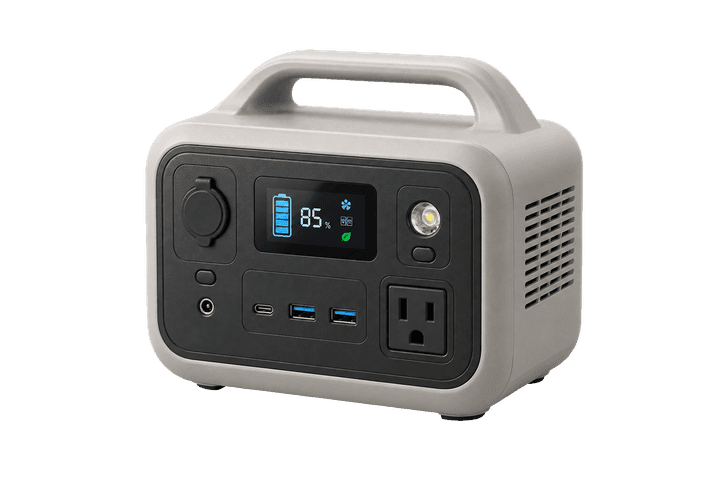
Illustrative image — not an exact product photograph.
- Capacity
- 288 Wh
- Output
- 600 W
- Weight
- 4.3 kg
Best for: camping, day trips, laptops and electronics, light emergency backup
Price, availability and current rating are shown on Amazon — PowerMatchLab does not display them because we have not independently verified them. As an Amazon Associate we may earn from qualifying purchases.
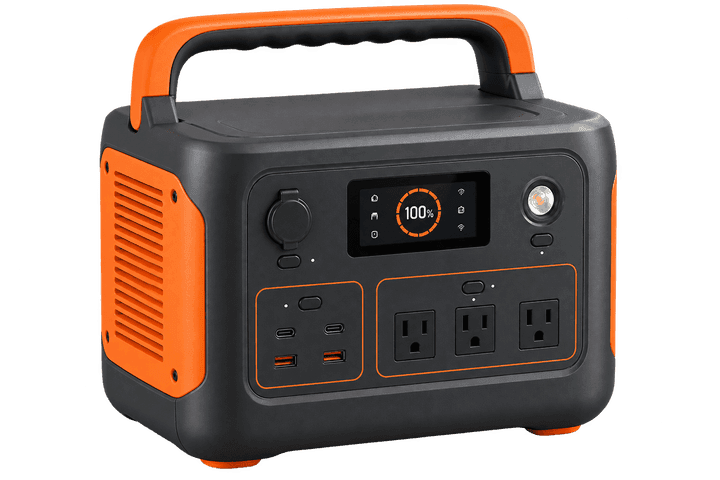
Illustrative image — not an exact product photograph.
- Capacity
- 1,070 Wh
- Output
- 1,500 W
- Weight
- 10.8 kg
Best for: camping, road trips, RV electronics, refrigerator backup
Price, availability and current rating are shown on Amazon — PowerMatchLab does not display them because we have not independently verified them. As an Amazon Associate we may earn from qualifying purchases.
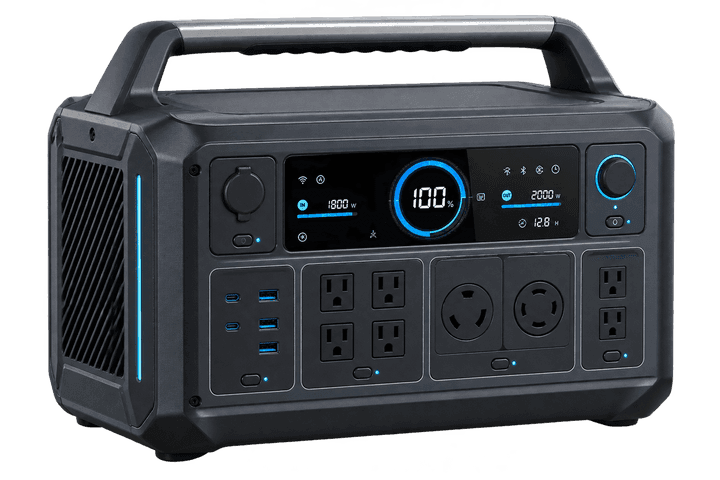
Illustrative image — not an exact product photograph.
- Capacity
- 2,010 Wh
- Output
- 1,500 W
- Weight
- 16.2 kg
Best for: refrigerator backup, extended home essentials, camping, low-load long runtime
Price, availability and current rating are shown on Amazon — PowerMatchLab does not display them because we have not independently verified them. As an Amazon Associate we may earn from qualifying purchases.
Related guides
FAQ
Does a power station stop working after its rated cycle count?
No — the cycle-life rating marks when capacity typically drops to a stated threshold (often 80%), not a failure point. The unit keeps working afterward, generally holding somewhat less charge than when new, with capacity continuing to decline gradually.
Does every LiFePO4 station have the same cycle life?
No — published figures vary by manufacturer and model, commonly from roughly 3,000 to 10,000+ cycles to a stated threshold. Always check the specific product's own published figure rather than assuming a single number applies to all LiFePO4 units.
Should I store my power station fully charged or empty?
This is manufacturer- and model-specific guidance — check your unit's manual for its recommended storage charge level, since following the actual manufacturer guidance for your model is more reliable than a generic rule.
Sources
- U.S. Department of Energy — DOE Explains...Batteries
- Cycle-life figures as published by manufacturers in products.json
Last updated September 4, 2026. This guide is educational and general; it does not assert product-specific performance beyond what products.json verifies. As an Amazon Associate, PowerMatchLab earns from qualifying purchases made through the Amazon links on this page — see the disclosure.