An outage guide is different from a single-appliance guide because the real question is priority: with limited capacity, what do you power first, and for how long? This guide walks through that decision alongside the same sizing method used across PowerMatchLab.
If you already know you specifically need to cover a refrigerator, a CPAP machine, or your whole home's essential circuits, PowerMatchLab has a dedicated guide for each — this one is the general planning starting point.
Step 1: Prioritize what actually needs power
Ready.gov, the U.S. government's official emergency-preparedness site, recommends taking an inventory of what in your home depends on electricity before an outage happens, including talking to your medical provider about a plan for any electrically powered medical devices and any medication that requires refrigeration.
A short list usually covers: refrigerator/freezer, phone and communication devices, lighting, internet/router if you need connectivity, and any medical equipment. Everything else — entertainment devices, non-essential appliances — is optional and can be added if capacity allows.
Step 2: Decide whether you're planning for hours or days
A short outage (a few hours) is mostly about keeping the fridge from warming up and keeping phones charged — a compact station can comfortably cover this.
A multi-day outage changes the math substantially: daily energy needs multiply by the number of days, which is why longer outages usually call for either a larger/expandable station, a recharge plan (solar or generator), or both. Size for the realistic worst case you're planning around, not just a typical short outage.
Step 3: Add up daily energy for your priority list
For each device on your priority list: watts × hours used per day = watt-hours per day, then add them together. A refrigerator alone is commonly 1,000-1,600 Wh/day; phone charging and a few LED lights add relatively little on top.
Check devices' rating labels or manuals for real watts rather than guessing — this is the same rule as every other PowerMatchLab sizing guide, and it matters more, not less, in a real outage.
Step 4: Convert to a recommended capacity
Using PowerMatchLab's standard assumptions — about 85% usable energy after conversion losses, plus roughly 20% reserve headroom: recommended minimum capacity (Wh) ≈ (daily energy Wh × days of outage) ÷ 0.85 × 1.2.
Worked example: your priority list (fridge, phones, some lights) totals 1,400 Wh/day, and you're planning for a 2-day outage. 1,400 × 2 ÷ 0.85 × 1.2 ≈ 3,953 Wh minimum recommended capacity.
Don't forget the surge, especially for the fridge
A refrigerator or freezer compressor surges to two to three times its running watts for a moment on startup. Whatever station you plan around needs a surge/peak rating that comfortably clears that spike, on top of enough continuous output for everything else running at the same time.
If you're also considering a fuel generator
A fuel-burning generator can run as long as fuel lasts, but produces carbon monoxide and must never run indoors, in a garage (even with the door open), or near windows or doors — the U.S. Consumer Product Safety Commission has documented carbon monoxide deaths tied to generators used too close to living spaces.
A battery power station avoids this risk entirely since it has no exhaust, which is one reason many households keep one specifically for the indoor-adjacent essentials (fridge, medical devices, communication) while reserving a generator, if they have one, for larger or longer-duration loads outdoors.
Recharging mid-outage
Solar input can extend a station's coverage during a multi-day outage, though real-world output is usually well below a panel's rated watts. A car's outlet or DC input, where supported, is another option if you're mobile during the outage. Plan your recharge option before you need it, not during.
Put a number on it
Related products
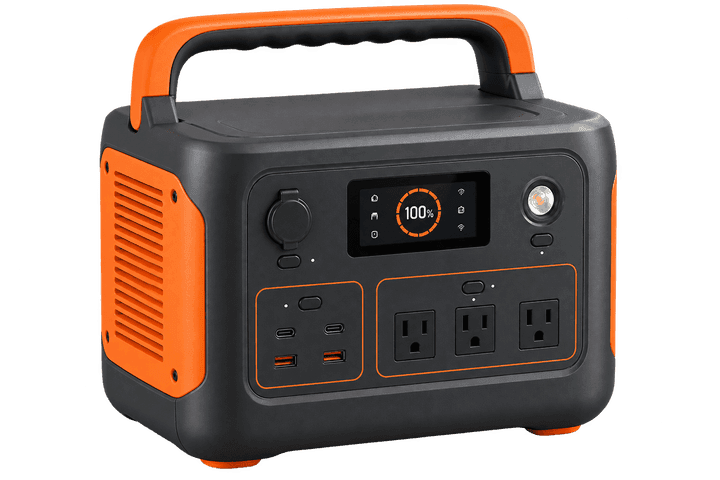
Illustrative image — not an exact product photograph.
- Capacity
- 1,070 Wh
- Output
- 1,500 W
- Weight
- 10.8 kg
Best for: camping, road trips, RV electronics, refrigerator backup
Price, availability and current rating are shown on Amazon — PowerMatchLab does not display them because we have not independently verified them. As an Amazon Associate we may earn from qualifying purchases.
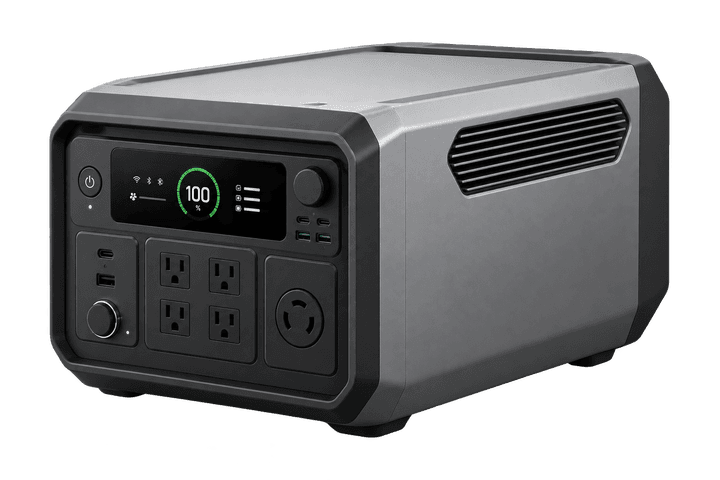
Illustrative image — not an exact product photograph.
- Capacity
- 1,024 Wh
- Output
- 1,800 W
- Weight
- 12.1 kg
Best for: home essentials, refrigerator backup, camping, electronics
Price, availability and current rating are shown on Amazon — PowerMatchLab does not display them because we have not independently verified them. As an Amazon Associate we may earn from qualifying purchases.
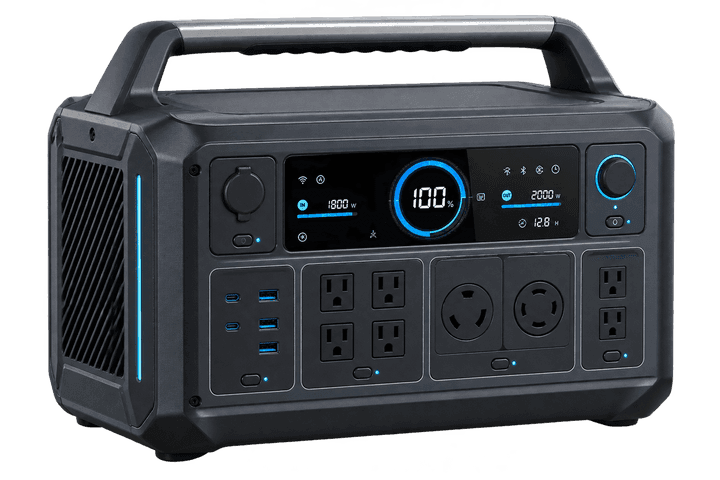
Illustrative image — not an exact product photograph.
- Capacity
- 2,010 Wh
- Output
- 1,500 W
- Weight
- 16.2 kg
Best for: refrigerator backup, extended home essentials, camping, low-load long runtime
Price, availability and current rating are shown on Amazon — PowerMatchLab does not display them because we have not independently verified them. As an Amazon Associate we may earn from qualifying purchases.
Related guides
FAQ
- How long will a power station last during an outage?
- Divide its usable capacity (roughly 85% of rated Wh) by your priority list's daily energy total from Step 3. PowerMatchLab's Power Calculator and its dedicated runtime guide can help work this out for your exact devices.
- What should I power first if capacity is limited?
- Refrigeration, communication (phone charging, and internet if you need connectivity), lighting, and any medical equipment are the common priority list — see Ready.gov's guidance for a fuller household inventory approach.
- Is it safe to run a generator in my garage during an outage?
- No. The U.S. Consumer Product Safety Commission specifically warns against running fuel-burning generators indoors, in an attached garage even with the door open, or near windows and doors, because of carbon monoxide risk.
- Can I combine a power station with a generator?
- Yes — some households use the power station for quiet, always-on essentials and only start a generator (outdoors, away from the house) for larger loads or when the battery runs low. Check compatibility before wiring the two together electrically.
Sources
- Ready.gov (FEMA) — Power Outages
- U.S. Consumer Product Safety Commission — Carbon Monoxide Fact Sheet
- Manufacturer specification sheets referenced in products.json
Last updated September 3, 2026. This guide is educational and general; it does not assert product-specific performance beyond what products.json verifies. PowerMatchLab may earn a commission from Amazon links once the Associates programme is active — see the disclosure.