"How long will it last" always depends on what you're running — there is no single answer for a 1000Wh station any more than there is for a 1000Wh battery of any kind. This guide shows the exact calculation and applies it to several common device categories so you can see how it scales.
Every figure below is a calculation from the same formula PowerMatchLab uses on its product pages, not a measured test result — treat it as a planning estimate and check your own device's real wattage for an accurate number.
The formula: usable energy ÷ device watts
Estimated runtime (hours) = usable energy (Wh) ÷ device watts. Usable energy is not the full nameplate capacity — inverter and conversion losses mean roughly 85% is actually usable, the same conservative planning figure used throughout PowerMatchLab.
For a 1000Wh-class station: usable energy ≈ 1,000 × 0.85 = 850 Wh. Divide that by whatever you're running to get estimated hours.
Worked examples for common device categories
Using 850 Wh of usable energy and typical, approximate wattages for common device categories:
These device wattages are broad, commonly cited category approximations, not a measurement of any specific product — your actual appliance may draw meaningfully more or less. Always check its rating label or manual, or measure it with a plug-in energy meter, before relying on a runtime estimate.
- Full-size refrigerator (~150 W average): 850 ÷ 150 ≈ 5.7 hours
- CPAP machine (~40 W): 850 ÷ 40 ≈ 21.3 hours
- Laptop (~60 W): 850 ÷ 60 ≈ 14.2 hours
- LED TV (~100 W): 850 ÷ 100 ≈ 8.5 hours
- Space heater (~1,500 W): 850 ÷ 1,500 ≈ 0.6 hours
Why your real number will differ
Cycling loads (a fridge compressor, a space heater's thermostat) don't draw their rated watts continuously, so their real daily energy use is usually lower than watts × 24 hours would suggest — PowerMatchLab's refrigerator guide covers this in more depth.
Ambient temperature, battery age, and how many other devices share the same station at once all shift the real-world number away from the calculated one. Treat every figure here as a starting point for planning, not a guarantee.
Scaling to other capacity classes
The same formula scales linearly: usable energy ÷ device watts. A 2,000Wh station usable at roughly 1,700 Wh runs any of the devices above for roughly twice as long; a 300Wh station usable at roughly 255 Wh runs them for roughly a third as long.
PowerMatchLab's Power Calculator does this math automatically for your exact device list and target capacity, across the actual products in the catalog.
Runtime capacity isn't the same as continuous output
A long estimated runtime only matters if the station's continuous output watts can handle the device in the first place — a 1000Wh-class station with a modest output rating may not be able to start a large motor-driven appliance at all, regardless of how many hours the capacity math suggests.
Check both numbers separately: continuous/surge output (can it start and run the device) and capacity-based runtime (how long it lasts once running). PowerMatchLab's watts-vs-watt-hours guide covers the distinction in detail.
Put a number on it
Related products
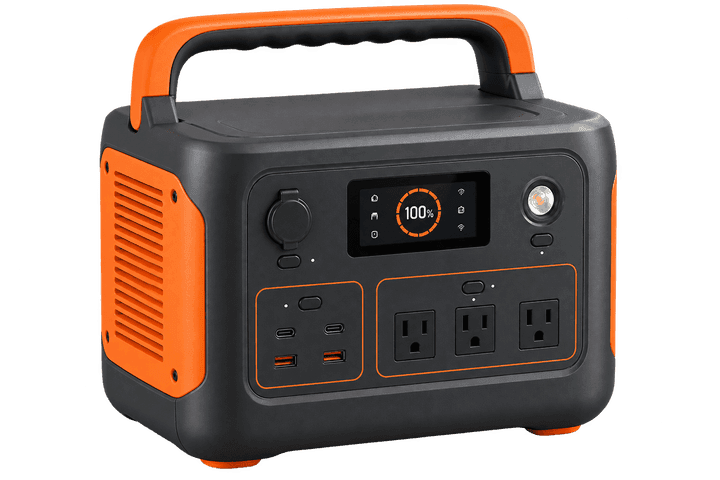
Illustrative image — not an exact product photograph.
- Capacity
- 1,070 Wh
- Output
- 1,500 W
- Weight
- 10.8 kg
Best for: camping, road trips, RV electronics, refrigerator backup
Price, availability and current rating are shown on Amazon — PowerMatchLab does not display them because we have not independently verified them. As an Amazon Associate we may earn from qualifying purchases.
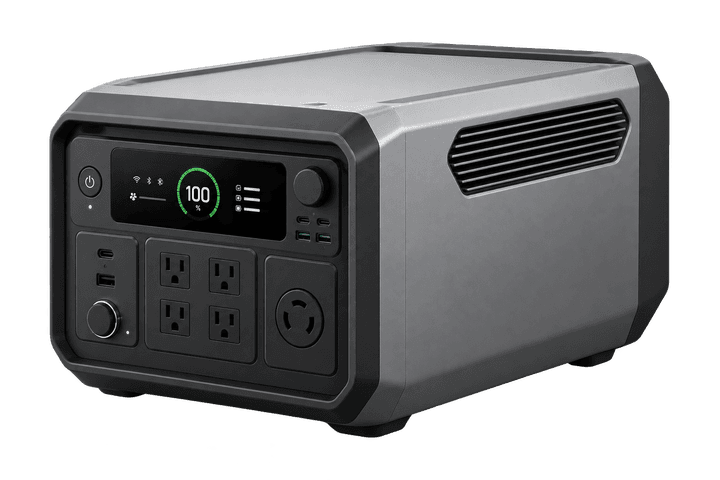
Illustrative image — not an exact product photograph.
- Capacity
- 1,024 Wh
- Output
- 1,800 W
- Weight
- 12.1 kg
Best for: home essentials, refrigerator backup, camping, electronics
Price, availability and current rating are shown on Amazon — PowerMatchLab does not display them because we have not independently verified them. As an Amazon Associate we may earn from qualifying purchases.
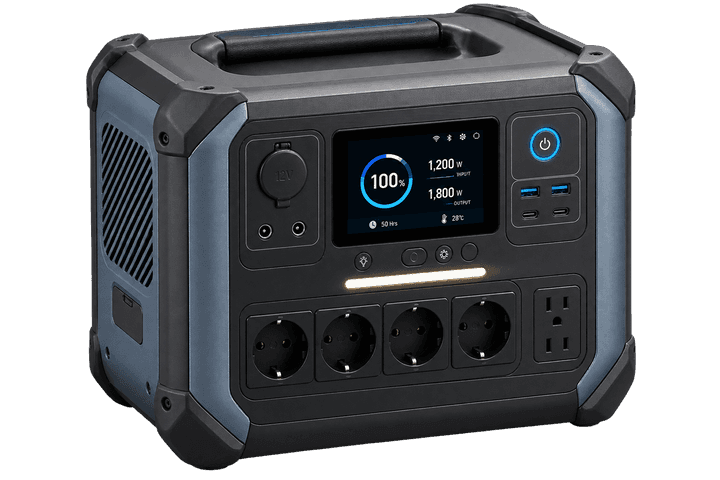
Illustrative image — not an exact product photograph.
- Capacity
- 1,024 Wh
- Output
- 2,000 W
- Weight
- Not verified
Best for: home essentials, camping, RV use, high-power appliances
Price, availability and current rating are shown on Amazon — PowerMatchLab does not display them because we have not independently verified them. As an Amazon Associate we may earn from qualifying purchases.
Related guides
FAQ
- Is 850 Wh always the usable energy for a 1000Wh station?
- 85% is a conservative planning assumption used across PowerMatchLab, not a universal constant — real usable energy varies by unit, battery age, and load. Treat 850 Wh as a reasonable planning estimate for a 1,000Wh-class unit, not an exact guarantee.
- Why does my estimated runtime look different from what I've seen elsewhere?
- Different sources assume different device wattages and different usable-energy percentages. Always check which device watts and efficiency assumption a given estimate is using — and ideally substitute your own device's real, measured wattage.
- Does a 1000Wh station mean 1000 watts of output?
- No — capacity (Wh, energy) and continuous output (W, power) are separate specs. A station's watt-hour rating tells you how long it can run something; its watt rating tells you what it can run at all.
Sources
- U.S. Department of Energy — Estimating Appliance and Home Electronic Energy Use
- Manufacturer specification sheets referenced in products.json
Last updated September 3, 2026. This guide is educational and general; it does not assert product-specific performance beyond what products.json verifies. PowerMatchLab may earn a commission from Amazon links once the Associates programme is active — see the disclosure.